Decorative Plywood and the Push for NAF: How Can Buyers Navigate Global Emission Standards in 2026?
April 22, 2026
The growing demand for healthier indoor spaces, tighter global regulations, and sustainability-driven procurement is making NAF (No-Added-Formaldehyde) Decorative Plywood a strategic priority in 2026. For importers, furniture manufacturers, architects, and commercial project buyers, navigating global emission standards is no longer simply a compliance exercise. It has become a product selection criterion that influences market access, brand value, and long-term risk management. From CARB2 & EPA TSCA Title VI Compliance requirements in North America to expanding green building specifications worldwide, decorative plywood purchasing decisions are increasingly linked to emissions performance, adhesive chemistry, and credible sustainable building materials certifications.
This shift is also changing how suppliers compete. Buyers are no longer evaluating decorative panels only on aesthetics, veneer selection, or cost efficiency. They are scrutinizing ultra-low emission interior panels, requesting traceable documentation, and comparing alternative bonding technologies such as Soy-based adhesive technology. For decision-makers sourcing decorative plywood in 2026, understanding these standards and material innovations is essential for balancing compliance, sustainability, and commercial performance.
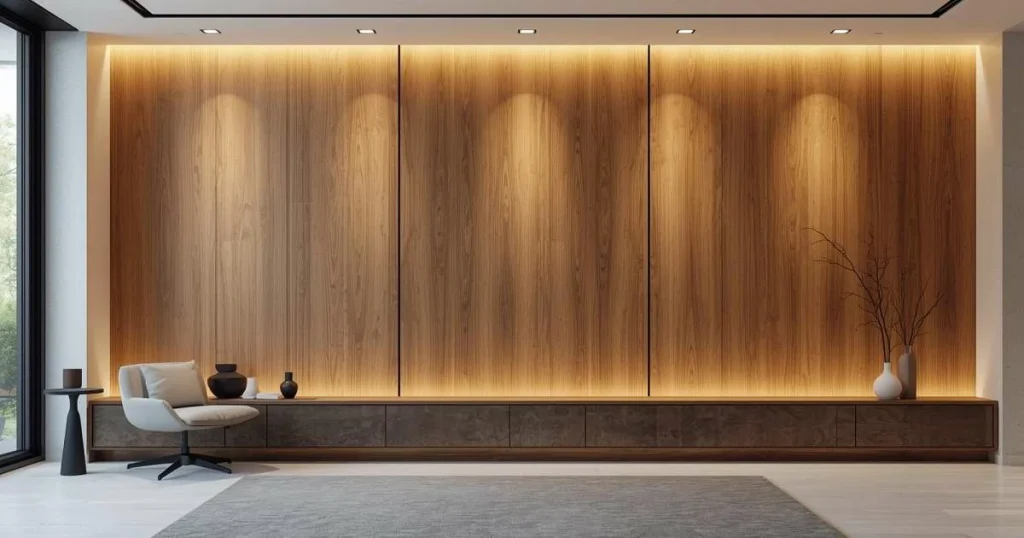
Why Is NAF Decorative Plywood Becoming a Global Procurement Priority?
The move toward NAF materials reflects a broader structural change in building product sourcing.
Health-Driven Demand Is Reshaping Material Specifications
Interior material selection has become closely tied to indoor air quality objectives. Commercial developers, hospitality projects, educational facilities, and residential builders increasingly seek products that minimize formaldehyde exposure risks.
NAF (No-Added-Formaldehyde) Decorative Plywood addresses this demand by eliminating intentionally added formaldehyde in resin systems, often replacing conventional binders with alternative technologies.
This shift is particularly visible in premium interior fit-out markets where ultra-low emission interior panels are becoming baseline requirements rather than specialty products.
Global Regulations Are Tightening
Regulatory alignment is another major driver.
CARB2 & EPA TSCA Title VI Compliance has become a fundamental requirement for many plywood suppliers targeting the U.S. market. These frameworks set formaldehyde emission limits and impose testing, certification, and labeling obligations.
At the same time, broader international procurement standards increasingly favor materials with documented low-emission performance.
For buyers sourcing decorative or hardwood plywood, compliance verification is now often part of supplier qualification.
How CARB2 and EPA TSCA Title VI Compliance Influence Buying Decisions
For importers and manufacturers, emissions compliance is now directly connected to market access.
Understanding CARB2 and EPA Requirements
While often referenced together, these frameworks play distinct but related roles.
CARB2 established stringent airborne toxic control requirements for composite wood products, while EPA TSCA Title VI adopted national formaldehyde emission regulations aligned closely with those standards.
Key buyer concerns typically include:
- Third-party certification status
- Panel emission testing results
- Supply chain traceability
- Labeling and documentation consistency
- Ongoing compliance monitoring
Procurement teams increasingly request compliance evidence during supplier audits rather than after orders are placed.
Table 1. Common Emission Compliance Benchmarks Relevant to Decorative Plywood
| Standard or Certification | Primary Focus | Buyer Relevance |
|---|---|---|
| CARB2 | Formaldehyde emissions control | U.S. regulatory access |
| EPA TSCA Title VI | National emissions compliance | Import and distribution |
| FSC Certification | Responsible forestry | Sustainability sourcing |
| LEED Material Credits | Green building contribution | Project specification support |
How Soy-Based Adhesive Technology Is Changing Panel Manufacturing
One of the most significant developments supporting NAF adoption is adhesive innovation.
Why Soy-Based Systems Are Gaining Attention
Soy-based adhesive technology has attracted interest because it can support low-emission performance while maintaining structural bonding properties.
Compared with conventional urea-formaldehyde systems, soy-based alternatives may offer:
- Reduced formaldehyde emissions
- Improved indoor air quality profile
- Compatibility with NAF product positioning
- Support for sustainable product claims
For many buyers, resin chemistry is becoming as important as veneer species or panel appearance.
Balancing Sustainability and Performance
The market does not treat sustainability and performance as separate priorities anymore.
Buyers expect low-emission decorative panels to maintain:
- Bond integrity
- Surface stability
- Machining performance
- Moisture resistance, where specified
- Consistent finishing compatibility
This is particularly relevant for engineered decorative panels used in demanding commercial interiors.
Talk with our team about sourcing compliant decorative plywood solutions for your next project.
Why Ultra-Low Emission Interior Panels Matter Beyond Compliance
Many buyers now view emissions performance as a strategic differentiator rather than only a regulatory threshold.
Premium Projects Are Raising Material Standards
Hospitality, healthcare, education, and luxury residential sectors often apply stricter specifications than minimum legal requirements.
Ultra-low emission interior panels are increasingly specified to support:
- Indoor environmental quality goals
- Wellness-oriented building concepts
- Green project certifications
- Brand-driven sustainability commitments
This trend is expanding demand beyond regulation-driven markets.
Sustainable Building Materials Certifications Strengthen Market Positioning
Documentation is becoming central to value creation.
Sustainable building materials certifications can help buyers validate both environmental claims and procurement standards.
Commonly requested certifications may support:
- Green building program contributions
- Responsible sourcing verification
- Product transparency requirements
- Corporate ESG reporting objectives
For global sourcing teams, certification credibility often influences supplier preference.
What Should Buyers Evaluate When Selecting NAF Decorative Plywood Suppliers?
Choosing compliant material is only part of the equation. Supplier capability matters equally.
Evaluate Product and Certification Alignment
Procurement teams should assess:
- Verified NAF claims
- CARB2 & EPA TSCA Title VI Compliance documentation
- Third-party testing frequency
- Certification scope relevance
- Technical data transparency
Documentation quality often signals supplier maturity.
Assess Manufacturing and Technical Support
Working with experienced hardwood plywood manufacturers can provide greater assurance when balancing emissions targets, decorative performance, and project-specific requirements.
Technical support may include:
- Panel specification guidance
- Veneer and substrate matching
- Compliance documentation support
- Custom project solutions
These factors often affect risk as much as product pricing.
Table 2. Strategic Supplier Evaluation Criteria for NAF Decorative Panels
| Evaluation Factor | Strategic Importance |
|---|---|
| Verified Emission Compliance | High |
| Adhesive Technology | High |
| Certification Portfolio | High |
| Manufacturing Consistency | High |
| Customization Support | Medium-High |
| Price Competitiveness | Medium |
How Will Emission Standards Continue Evolving After 2026?
The regulatory landscape is unlikely to remain static.
Lower Emission Thresholds May Continue Emerging
Some markets are already pushing beyond traditional low-emission classifications toward stricter product expectations.
This could further increase demand for advanced NAF decorative solutions.
Transparency Expectations Are Rising
Beyond product compliance, buyers increasingly seek greater disclosure around material ingredients and lifecycle impacts.
This trend may strengthen the importance of sustainable building materials certifications and environmental product documentation.
Innovation Will Likely Drive Competitive Advantage
Suppliers investing in adhesive innovation, emissions performance, and certification readiness may gain stronger positioning as standards evolve.
For decision-makers, sourcing strategies increasingly need to anticipate where regulations are going, not only where they stand today.
FAQ
What does NAF decorative plywood mean?
NAF (No-Added-Formaldehyde) Decorative Plywood refers to panels manufactured without intentionally added formaldehyde in adhesive systems, often supporting reduced emissions.
Is CARB2 the same as EPA TSCA Title VI Compliance?
They are closely aligned but distinct regulatory frameworks. Both establish formaldehyde emission requirements relevant to composite wood products.
Why is soy-based adhesive technology important?
Soy-based adhesive technology supports low-emission panel development while helping meet sustainability and performance objectives.
Are ultra-low emission interior panels required for all projects?
Not universally, but they are increasingly specified in premium and sustainability-driven projects.
Why do sustainable building materials certifications matter?
They help validate environmental claims, support green building programs, and strengthen procurement confidence.
Why Buyers Choose Voyage
Voyage supplies decorative plywood solutions designed to meet evolving market expectations for quality, compliance, and sustainable performance. Our focus includes advanced NAF (No-Added-Formaldehyde) Decorative Plywood solutions, support for CARB2 & EPA TSCA Title VI Compliance requirements, and products aligned with growing demand for ultra-low emission interior panels. With strong technical capabilities, sourcing expertise, and commitment to responsible manufacturing, Voyage supports global buyers navigating increasingly complex material standards.
References
- U.S. Environmental Protection Agency TSCA Title VI
https://www.epa.gov/formaldehyde/formaldehyde-emission-standards-composite-wood-products - California Air Resources Board Composite Wood Program
https://ww2.arb.ca.gov/resources/fact-sheets/composite-wood-products-regulation - Forest Stewardship Council
https://fsc.org - Wikipedia: Formaldehyde
https://en.wikipedia.org/wiki/Formaldehyde