How to Master Decorative Plywood Grading for B2B Procurement: A Definitive Guide to Quality and Cost Efficiency
April 30, 2026
Understanding Decorative Plywood Grading is the cornerstone of successful B2B procurement because it directly dictates the aesthetic outcome, structural integrity, and total project cost for furniture manufacturers and interior designers. At its core, the grading system for decorative panels identifies the quality of the face veneer, the consistency of the core, and the compliance with safety standards. For professional buyers, mastering these grades means being able to distinguish between a panel meant for a hidden structural cabinet component and one destined for a high-end boardroom table. In the following sections, we will break down the complexities of veneer faces, core constructions, and the critical certifications that define premium hardwood plywood.
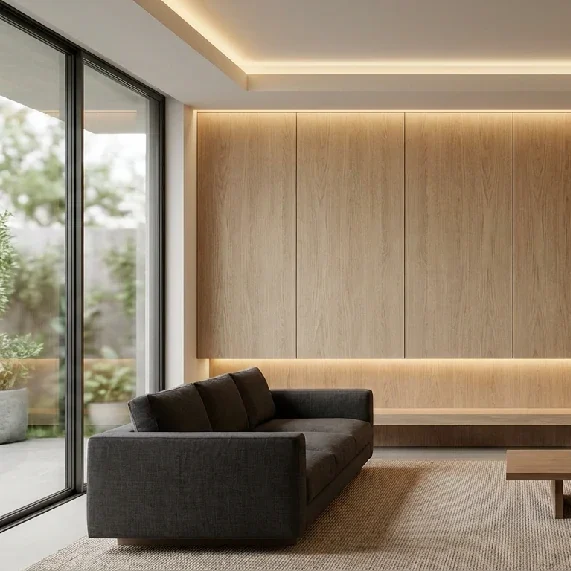
Decoding Face Veneer Grades: From Premium Aesthetics to Utility Performance
When sourcing hardwood veneer plywood, the first thing a decision-maker looks at is the face grade. The grading system for the face usually follows a lettering system (A, B, C, D) or a numbering system (1, 2, 3, 4) depending on the regional standard, such as the HPVA (Hardwood Plywood and Veneer Association).
Grade A is considered the “Premium” grade. It features highly matched wood grains with minimal natural characteristics like small pin knots or mineral streaks. This is the primary choice for luxury furniture and high-visibility wall paneling. Grade B is “Select,” allowing for slightly more natural variation but still maintaining a clean, professional appearance.
As we move down to Grades C and D, the presence of knots, discoloration, and repaired patches increases. These are often used for the backs of cabinets or upholstered furniture where the wood grain will not be exposed to the end-user. Choosing the right grade ensures you aren’t overpaying for premium aesthetics where they aren’t needed.
Technical Comparison of Wood Veneer Plywood Panels by Species
The species of the veneer plays a massive role in how the grading is applied. Different woods have different natural “flaws” that are acceptable within specific grades. For instance, Maple veneer plywood is prized for its uniform, light-colored sapwood. In a Grade A Maple panel, you expect almost no heartwood (darker streaks), providing a pristine canvas for light stains or clear coats.
Conversely, White oak veneer plywood is celebrated for its prominent grain patterns and “fleck” figures. When grading White Oak, inspectors look for the consistency of the rift-cut or quarter-slicing to ensure the linear grain meets the architectural requirements of modern B2B projects.
Table 1: Comparison of Popular Hardwood Plywood Face Characteristics
| Veneer Species | Common Grade | Visual Characteristics | Best B2B Application |
| White Oak | Grade A / Plain Sliced | Strong cathedral grain, consistent tan hue | Executive desks, architectural wall panels |
| Maple | Grade A / White | Uniform creamy white, minimal mineral streaks | High-end kitchen cabinetry, lab furniture |
| Walnut | Grade B / Natural | Rich dark brown, allows some sapwood variation | Boutique hotel furniture, decorative accents |
| Birch | Grade C / Rotary Cut | Varied grain, visible patches allowed | Drawer boxes, internal shelving |
The Structural Foundation: Core Types and Hardwood Plywood Sheets Stability
While the face veneer provides the beauty, the core of the hardwood plywood sheets provides the strength. B2B buyers must choose between several core types based on the final application and the required weight-to-strength ratio.
Veneer Core (VC) is the most traditional, made of alternating layers of wood plies. It offers excellent screw-holding power and is relatively lightweight. For projects requiring extreme flatness, such as large wardrobe doors, an MDF (Medium Density Fiberboard) or Particleboard core is often preferred because these engineered cores do not warp as easily as natural wood plies.
Professional manufacturers also offer “Combo Cores,” which use veneer layers for strength and thin layers of MDF under the face veneer to provide a smoother surface for delicate wood veneer plywood panels. This prevents the “telegraphing” of core grain through the thin decorative face.
If you have specific technical questions regarding core stability or volume pricing, please contact our expert team for a customized quote and material consultation.
Compliance and Safety: Navigating CARB P2 Hardwood Plywood Standards
In today’s global market, “Quality” is no longer just about how a panel looks; it is about how safe it is for the end consumer. For importers and manufacturers in North America and Europe, sourcing CARB P2 hardwood plywood is a legal and ethical requirement.
The California Air Resources Board (CARB) Phase 2 standard strictly limits formaldehyde emissions from composite wood products. High-quality decorative plywood must use Ultra-Low Emitting Formaldehyde (ULEF) or No-Added Formaldehyde (NAF) resins. Ensuring your supply chain adheres to these standards protects your brand from liability and ensures your products are eligible for green building certifications like LEED.
Furthermore, premium White oak veneer plywood that carries the CARB P2 seal is often indicative of a factory that maintains high-level quality control across all stages of production, from log selection to final sanding.
Economic Advantages: Hardwood Plywood Low Tariffs and Global Sourcing
For B2B procurement managers, the “landed cost” is the ultimate metric. Understanding the geopolitical landscape of timber trade can lead to significant savings. Currently, certain regions offer Maple veneer plywood under favorable trade terms.
Sourcing hardwood plywood low tariffs allows companies to maintain high material standards without inflating the retail price of their furniture lines. This is particularly important when dealing with high-volume orders for multi-unit residential developments or large-scale office fit-outs. By partnering with manufacturers who have optimized logistics and trade compliance, buyers can secure premium White Oak or Maple panels at a fraction of the cost of domestic boutique mills.
Common Questions in Decorative Plywood Procurement
What is the difference between Rotary Cut and Sliced Veneer?
Rotary cut veneer is peeled from the whole log like a roll of paper, creating a wide, variegated grain pattern. Sliced veneer is cut in thin strips (like a loaf of bread), resulting in more natural and consistent grain patterns suitable for decorative furniture.
Does CARB P2 affect the strength of the plywood?
No, CARB P2 refers strictly to the chemical composition of the glue and its formaldehyde emission levels. It does not negatively impact the structural integrity or the bonding strength of the hardwood plywood sheets.
How can I ensure grain matching across multiple panels?
For large projects, you should request “Sequence Matching” or “Blueprint Matching.” This ensures that the wood veneer plywood panels are sliced from the same flitch (log section) and numbered for chronological installation.
Why is White Oak more expensive than Birch?
White Oak is a slower-growing hardwood with high demand in the architectural market. Its density, rot resistance, and sought-after grain pattern command a higher price point compared to faster-growing utility woods like Birch or Poplar.
Discover the Voyage Advantage: Premium Hardwood Plywood Solutions
At Voyage, we specialize in bridging the gap between high-end architectural requirements and large-scale industrial manufacturing. As leading hardwood plywood manufacturers, we understand that every B2B client has unique needs, whether it is a specific thickness tolerance for CNC machining or a custom veneer species for a luxury brand rollout.
Our commitment to quality starts with the selection of the finest hardwood logs and extends to our rigorous adherence to international safety standards. We provide a steady supply of CARB P2 hardwood plywood to global markets, ensuring that our clients receive products that are as safe as they are beautiful. By combining traditional woodworking expertise with modern supply chain efficiency, Voyage offers premium decorative panels with the benefit of hardwood plywood low tariffs and reliable delivery schedules. When you choose Voyage, you are choosing a partner dedicated to the long-term success of your production line.
References
- Hardwood Plywood and Veneer Association (HPVA) Standards: https://www.decorativepanels.org/
- California Air Resources Board (CARB) Formaldehyde Regulations: https://ww2.arb.ca.gov/resources/documents/formaldehyde-atcm-frequently-asked-questions
- International Wood Products Association (IWPA): https://www.iwpawood.org/