Commercial Laminate Flooring A Buyer’s Guide for Offices Shops and Hotels
November 20, 2026
Commercial laminate flooring can suit offices, shops and hotel interiors when its documented use class matches the space. Buyers should also check abrasion resistance, moisture exposure, rolling loads, underlay and installation requirements. A higher AC rating alone does not establish suitability for every commercial area.
For distributors and project contractors, the practical goal is a floor that fits the building, the maintenance routine and the budget. This guide explains what to specify before ordering, which documents to request and how to compare complete flooring packages.
1 Start With the Commercial Space and Daily Use
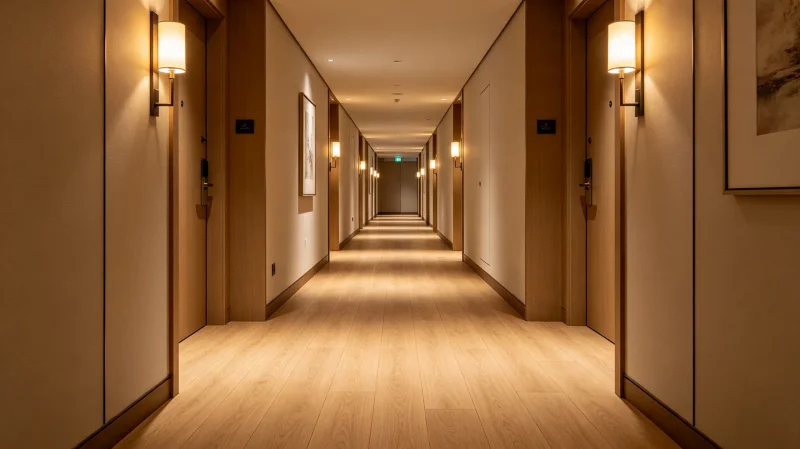
First, divide the project into zones. An office meeting room, a retail entrance and a hotel corridor can face different loads. Therefore, one specification may not suit the whole building.
Use the table below to prepare a supplier brief. These are procurement considerations, not automatic approvals for any product.
| Space | Main exposure to discuss | What to confirm before selection |
| Office work area | Foot traffic, rolling office chairs and stationary desk or cabinet loads | Declared use class, chair caster suitability and an underlay compatible with the expected loads |
| Boutique or showroom | Repeated foot traffic, grit tracked in from outside and movable display fixtures | Wear performance, entrance protection and display loading |
| Hotel guest room | Luggage wheels, frequent housekeeping and impact sound | Approved commercial use, surface care and acoustic requirements |
| Hotel corridor | Concentrated foot traffic and loaded housekeeping or luggage carts | Rolling-load suitability, joint performance and commercial warranty scope |
| Indoor entrance by an exterior door | Tracked-in rainwater and abrasive dirt | Moisture exposure limits, entrance matting and where a more suitable finish is needed |
Tell the supplier whether furniture stays in place or moves frequently. For example, mark where staff roll loaded housekeeping carts and where office chairs move repeatedly. Also, share the cleaning method and target opening date.
2 Understand Commercial Laminate Flooring Ratings
AC means abrasion class. It describes resistance to surface abrasion. However, it does not independently establish scratch resistance, water resistance, impact performance or service life.
A declared use class helps you match flooring to the space. The Association of the European Producers of Laminate Flooring (EPLF) lists Classes 31 to 34 for commercial use, from moderate to very heavy. Ask for evidence of the declared use class for the exact product. [1]
AC4 and AC5 commonly appear in commercial product comparisons. Nevertheless, verify both the abrasion rating and the complete use classification for the quoted construction. Do not infer a commercial class solely from an AC number.
For example, an office buyer should also ask about chair casters and point loads. A retail buyer should discuss grit, display units and cleaning. For background, see our AC4 vs AC5 laminate flooring guide.
3 Compare Thickness Core and Surface Together
Voyage offers 8 mm, 10 mm and 12 mm laminate flooring options, with specifications configured for the order. However, thickness alone cannot determine commercial suitability.
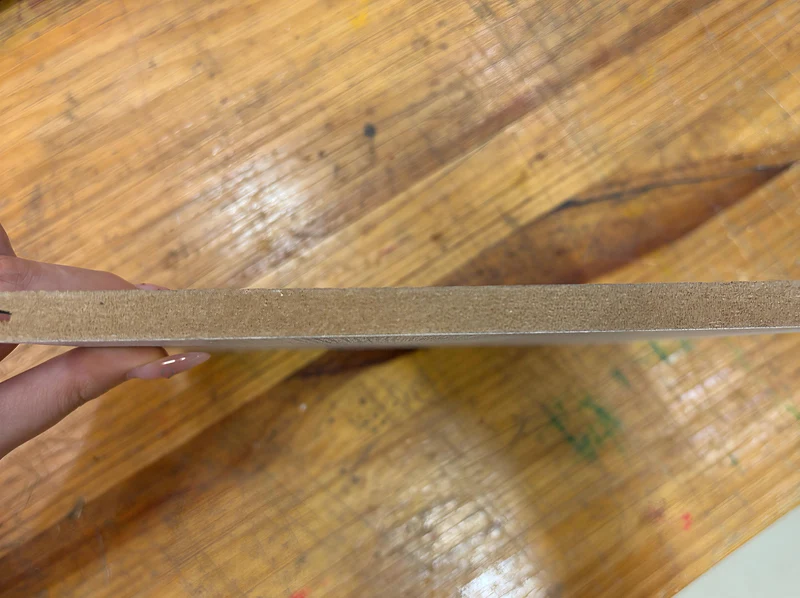
First, compare the complete construction. Ask about finished thickness and tolerance, HDF core specification, locking profile and relevant test evidence. Then review the assembled sample for visible joint gaps, edge damage and consistency.
A thicker plank increases the finished floor height. Check the combined height of the plank and underlay against door clearances and adjoining finishes. For freight comparisons, ask each supplier for the area per carton, gross weight and proposed container load.
For appearance, approve the décor, gloss and texture under the intended lighting. EIR means embossed in register: the surface texture follows the printed grain. It provides a wood-look finish; it does not turn laminate into a wood-veneer floor.
Our 8 mm AC4 EIR laminate flooring and 12 mm AC5 EIR laminate flooring provide starting points for specification discussions. Confirm the selected product against the project requirements. For a closer comparison, read our 8 mm vs 10 mm vs 12 mm thickness guide.
4 Match Water Protection to Real Exposure
Water exposure varies across a commercial building. Occasional spills in a meeting room differ from repeated wet cleaning at an entrance.
Therefore, ask what a water-resistance claim covers. Does the evidence concern an individual plank, assembled joints or a complete installed system? Also, check the exposure time, acceptance criterion and installation conditions. A test duration should not become a promise covering every leak or wet area.
Next, compare the written maintenance instructions with the operator’s routine. If cleaners use excessive water or equipment outside those instructions, a higher abrasion rating will not solve the mismatch.
Identify entrances, beverage stations and adjoining washrooms on the plan. Then discuss suitable boundaries, transitions and protection. Commercial kitchens and continuously wet spaces require a separate suitability assessment. Our waterproof laminate flooring evaluation guide explains how to review supporting evidence.
5 Specify Underlay and Installation Details
A commercial flooring order includes more than planks. The subfloor and underlay also affect the installed system. EPLF guidance addresses substrate preparation, moisture checks and underlay selection alongside installation. [2]
Before ordering, share the floor plan and available subfloor information. Ask the installer to confirm flatness, dryness and structural soundness. Underlay should not serve as a substitute for correcting an unsuitable base.
Also, compare underlay performance rather than thickness alone. Relevant properties include compressive strength, resistance to sustained loads and acoustic performance. EPLF explains that excessive underlay deformation can damage the joining system. Therefore, select a compatible product for the actual loading conditions. [3]
For floating installation, follow the selected product’s instructions for perimeter gaps, transitions and maximum continuous areas. Plan around fixed cabinetry and heavy fixtures so that they do not restrict required movement. Do not copy a universal expansion-gap figure into every project.
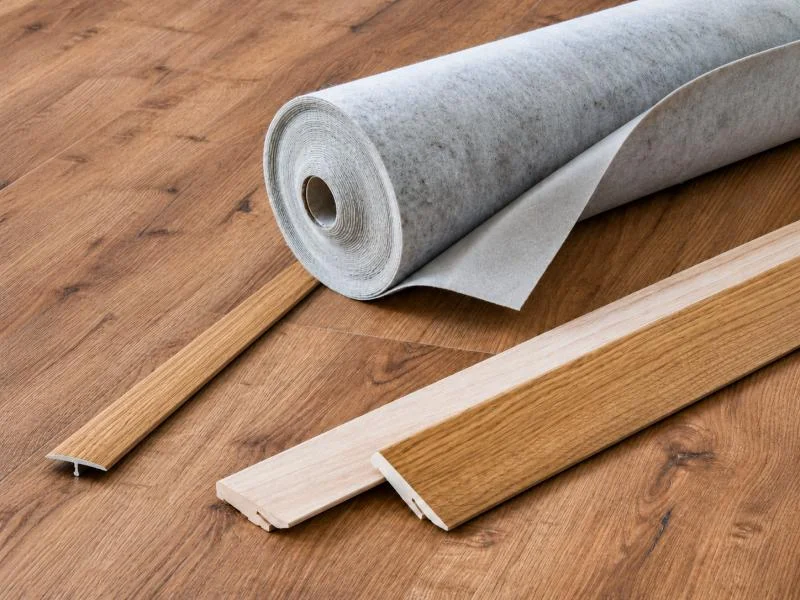
Finally, coordinate skirting, doorway profiles, transitions and stair components where needed. A floor plan helps identify their locations. Confirm dimensions, finishes and installation methods before finalizing quantities.
In our 5,000 m² laminate flooring case in Uzbekistan, we reviewed the contractor’s floor plan to identify which trims and transition profiles to include in the material quote.
6 Plan Cleaning and Maintenance Before Handover
Before opening, agree on a cleaning routine with the maintenance team. For example, use entrance mats to catch grit and moisture, and remove spills promptly. Check which cleaning products and equipment the flooring supplier permits.
EPLF describes routine laminate care as vacuuming and wiping with a well-wrung, slightly damp cloth. [4] For a commercial project, translate the supplier’s instructions into a practical cleaning schedule. Confirm any machine-cleaning proposal separately.
Use suitable furniture protection and compatible chair casters. In addition, discuss carts, equipment deliveries and heavy furniture moves before installation. Keep spare planks with identifiable décor and batch information to support future repairs.
7 Review Documents and the Complete Quotation
Ask for documents that identify the quoted product. These may include a specification sheet, relevant performance reports, installation instructions and written commercial warranty terms. Also, confirm the documentation needed for the destination and project.
If the designer specifies fire, slip, emissions or acoustic performance, request matching evidence. Acoustic results should identify the tested flooring and underlay assembly. Similarly, a report for another thickness or core may not support the quoted construction.
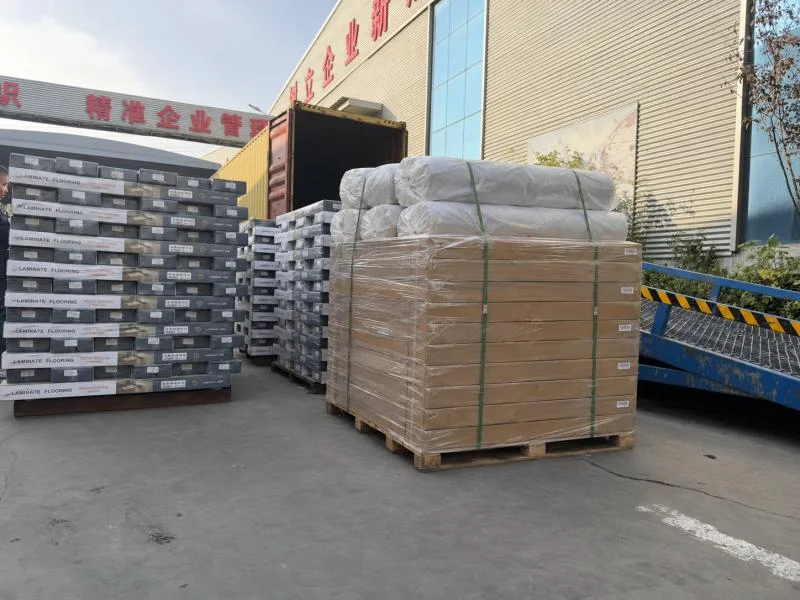
Compare the full supply package as well as the price per square meter. Ask suppliers to itemize the flooring, underlay, profiles, skirting and export packing. Compare delivery terms for the same named port or place. Show any excluded costs separately, such as installation labor, subfloor preparation, duties or local transport.
Finally, approve sample references, quantities and package identification before production. Confirm the lead-time trigger and dispatch schedule in writing. This helps the contractor coordinate delivery with site readiness.
8 Commercial Laminate Flooring Buyer Checklist
Before approving the order, confirm:
- Intended rooms, traffic patterns, casters and cart routes.
- Required use class and supporting abrasion evidence.
- Selected thickness, core, décor, texture and approved samples.
- Expected water exposure and permitted cleaning method.
- Compatible underlay and any acoustic requirements.
- Subfloor preparation, movement gaps and transition locations.
- Flooring and accessory quantities, including agreed spare material.
- Product documents, commercial warranty scope and exclusions.
- Packing, delivery terms, production timing and shipment identification.
Also, keep the installer and operator involved in specification approval. Their site and maintenance information can reveal requirements that a product sample cannot show.
Frequently Asked Questions
Is AC5 laminate flooring suitable for every commercial project?
No. AC5 describes abrasion performance. Commercial suitability also depends on the declared use class, loading, moisture conditions, installation system and warranty. Ask for approval for the intended space.
Is 12 mm laminate always better than 8 mm for an office?
No. Compare the complete product and installation requirements. An appropriate 8 mm specification may meet the brief, while 12 mm changes floor height and packing. Confirm caster and load performance separately.
Can laminate flooring be used in hotel corridors?
Potentially, when the selected product supports the intended commercial conditions. Confirm housekeeping-cart loads, acoustic requirements, cleaning methods and written warranty coverage before approval.
How should buyers compare quotations from different suppliers?
Compare quotes for the same declared use class, board specification, quantities and accessory list. Check whether each supplier includes packing and freight to the same named place. If the quotes cover different scopes, ask for a revised breakdown before comparing totals.
What should a contractor send for a project quotation?
Send the delivery city or port, floor plan and estimated area by zone. Include room uses, cleaning methods, known subfloor conditions, required accessories and the target delivery date. If a use class has already been specified, include it in the brief.
Discuss Your Commercial Flooring Project With Voyage
Voyage supplies laminate flooring for B2B buyers, including importers, distributors and project contractors. Thickness, décor, surface and packaging options can be discussed against the order requirements.
Share your floor plan, approximate area and delivery city or port. If your specifications are still open, tell us how each room will be used. Contact Voyage to discuss suitable samples and request an itemized quote for the flooring and accessories.
For more flooring and project updates, follow Voyage on Facebook.
Technical References
[1] EPLF About Laminate — commercial use classifications.
[2] EPLF Installation of Laminate Floor Coverings — June 2022.