Why Should Commercial Buyers Request Samples of Durable Pet-Friendly Flooring Before Placing Bulk Orders?
October 21, 2026
Commercial buyers must request physical samples of pet-friendly flooring to evaluate core density, scratch resistance, and joint locking strength under real test conditions. Lab certificates provide technical numbers, but physical samples allow procurement managers to perform in-house scratch and moisture tests before committing capital. For instance, a property management firm evaluating materials for multi-family units can test how wholesale laminate flooring tolerates heavy pet claws and surface liquid exposure. Ordering physical samples ensures that the selected floor meets strict commercial standards for durability, maintenance costs, and tenant satisfaction.
Sourcing decision-makers evaluate prospective supply partners based on material composition, wear layer ratings, core board density, and click-lock integrity. Modern commercial projects require products that withstand heavy foot traffic, pet nails, and frequent damp mopping. Whether you manage commercial real estate, run a retail distribution chain, or oversee large residential builds, testing samples reduces supply chain risk. This guide explains how B2B buyers audit flooring samples, evaluate high-density core board, and optimize bulk procurement.
How Do You Test Flooring Samples for Pet Durability and Scratch Resistance?
Evaluating physical flooring samples requires structured testing protocols focused on claw resistance, impact strength, and surface wear. Commercial buyers cannot rely solely on marketing claims when selecting materials for pet-friendly properties.
First, test surface hardness and scratch resistance using standard mechanical tools. Apply controlled pressure using a heavy metal stylus or a 50-grit micro-scratch tester across the wear layer. High-quality laminated flooring utilizes aluminum oxide topcoats that resist deep gouges from pet claws. Observe if the scratch penetrates the decorative paper layer or creates visible white haze on the surface.
Second, evaluate core board density and impact resistance. Drop heavy metallic objects onto the sample from standard counter heights to simulate falling pet dishes or heavy objects. High-density fiberboard cores absorb impact energy without cracking or indenting. Low-density alternatives show immediate surface indentation, which invites moisture penetration over time.
Third, test joint stability under localized pressure. Pet activity exerts localized point loads on plank connections, especially near room corners and doorways. Inspect the precise milling of the locking mechanism on your physical sample. Strong click profiles maintain tight seams under pressure, preventing liquid pet messes from seeping into subfloors.
Essential Sample Evaluation Steps
- Surface Scratch Audit: Run metal scrapers across the wear layer to verify AC4 or AC5 wear ratings.
- Moisture Sealing Test: Apply standing water over plank joints for 24 hours to check swell rates.
- Impact Resistance Assessment: Drop heavy objects directly onto plank faces to verify core strength.
- Locking Mechanism Inspection: Connect two sample pieces to evaluate joint tightness and lip alignment.
- Visual Decor Review: Verify pattern variation and realistic texture depth across multiple sample boards.
Table 1: Technical Testing Standards for Commercial Pet-Friendly Flooring
| Property Test | Industry Standard | Target Threshold | Risk Level if Unmet |
| Abrasion Resistance | EN 13329 / NALFA LF-01 | AC4 (3,000 cycles) or AC5 (6,000 cycles) | High wear and claw marks |
| Core Density | ISO 26987 / EN 323 | ≥ 850 kg/m³ High-Density Fiberboard | High denting risk |
| Thickness Swell | EN 13329 (24-Hour Immersion) | ≤ 8% Swell Rate | Joint peaking and cupping |
| Impact Resistance | NALFA LF-01 Small Ball Test | ≥ 12 N Impact Rating | Surface cracking from drops |
| Formaldehyde Emission | EN 717-1 / CARB Phase 2 | E1 or CARB 2 / TSCA Title VI Compliant | Regulatory non-compliance |
What Technical Characteristics Define Pet-Friendly Laminated Flooring?
Engineered materials outperform traditional options in demanding environments through advanced multi-layer construction. Understanding these technical components helps procurement officers select the correct product specifications.
High-Density Core Construction
The core board determines the structural stability of the entire plank. Modern HDF Laminated Flooring relies on high-density fiberboard exceeding 850 kilograms per cubic meter. Dense cores prevent swelling when liquid spills sit on surface joints. They also provide a firm foundation that prevents clicking joints from breaking under heavy animal weight.
Precision Angle-Locking Profiles
Tight joints act as the primary defense against liquid penetration. Advanced click systems compress plank edges together during installation, creating a mechanical barrier. When reviewing samples, verify that the joint profile snaps together without requiring excessive force or leaving visible gaps.
Advanced Wear Layers
The top protective layer shields the decorative paper from abrasive particles. Manufacturers infuse microscopic aluminum oxide particles into melamine resin layers. This creates a hard surface shield that resists dog nails, dragged furniture, and grit carried from outdoors.
Selecting a certified waterproof laminate flooring supplier guarantees that incoming orders match the exact technical specs verified during sample testing.
How Does High-Density Fiberboard Outperform Traditional Wood Flooring in Pet Environments?
Natural Wood Flooring offers timeless aesthetic appeal, but solid timber presents operational challenges in pet-friendly rental units. Natural hardwoods absorb moisture quickly, leading to warping, cupping, and permanent staining from urine or water bowls.
Sand and claws scratch soft polyurethane coatings on natural timber, requiring expensive floor refinishing every few years. In contrast, bulk laminate flooring provides superior surface hardness at a fraction of the lifecycle maintenance cost. The synthetic wear layer withstands repeated scrubbing with commercial disinfectants without dulling the surface sheen.
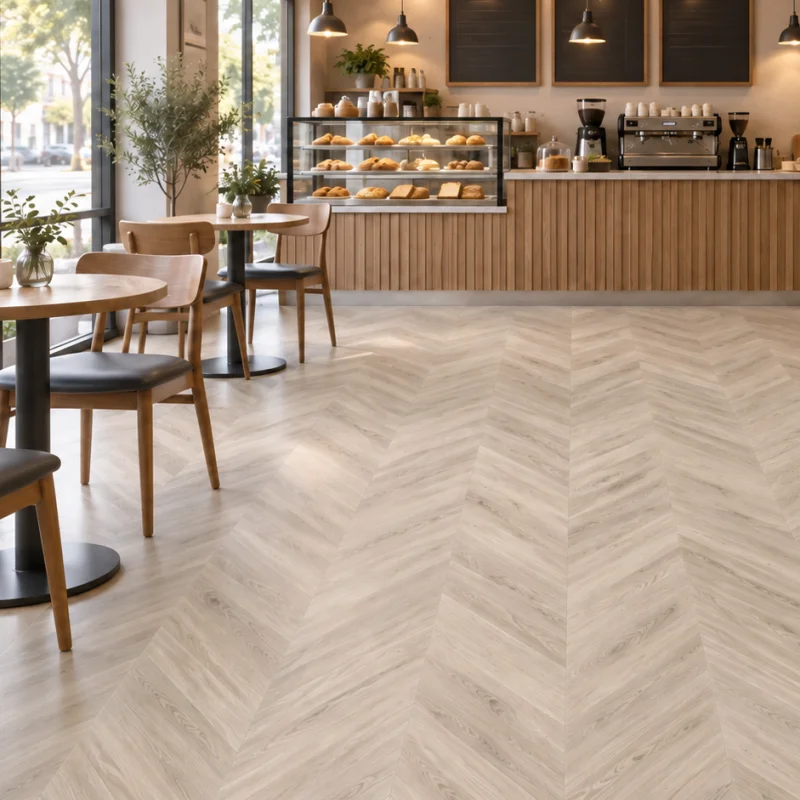
Laminated Parquet formats give developers the classic visual appeal of real hardwood herringbone patterns while maintaining commercial durability. Commercial property managers lower total cost of ownership by selecting high-density synthetic alternatives for multi-family developments.
Ready to test commercial-grade flooring samples for your upcoming projects? Contact our technical sales support team to request your customized sample kit today.
What Logistics and Sourcing Strategies Optimize Wholesale Procurement?
Securing Direct wholesale laminate flooring requires careful planning around lead times, order volumes, and freight consolidation. Streamlining factory-direct sourcing reduces material costs while preserving product quality.
First, establish clear technical specifications with the factory before requesting production runs. Specify exact wear layer thicknesses, core density ratings, and packaging standards. Establishing explicit tolerances prevents quality variations between initial samples and mass production.
Second, audit factory production capacity and quality assurance pipelines. Reliable suppliers conduct inline density testing, moisture checks, and squareness inspections during every shift. Requesting batch testing reports alongside physical shipment samples ensures full accountability.
Third, optimize container loading configurations to lower unit freight costs. High-density floor planks are heavy goods that hit weight limits before volume limits. Coordinate with supplier logistics teams to balance pallet counts and floor-loading options for maximum shipping efficiency.
How Should You Conduct In-House Water and Stain Testing on Factory Samples?
Once sample boxes arrive at your procurement office, conduct rigorous internal testing to confirm supplier claims. Controlled testing identifies potential material failures before installation on job sites.
Begin by assembling a four-plank sample grid on a flat surface. Ensure all click joints sit flush according to manufacturer instructions. Pour small amounts of common household liquids onto the center joints, including water, saline solution, and mild acids like vinegar.
Leave the liquids on the sealed joints for 12 to 24 hours at standard room temperature. Wipe the surface clean and disassemble the planks to inspect the core edges. Check for edge raising, swelling, or core softening along the click profile.
Next, test chemical stain resistance. Apply mud, pet messes, and oil-based liquids to the plank surface for 12 hours. Clean the sample with standard household floor cleaners. High-performance surfaces show zero stain retention or discoloration, preserving appearance across multi-year lease cycles.
Frequently Asked Questions
Why is core density critical for pet-friendly flooring?
High density prevents structural denting from localized impact and reduces water absorption rates. Dense fiberboard cores hold click profile locks tight, keeping surface joints sealed against standing liquids.
How do AC wear ratings apply to commercial property applications?
AC ratings measure surface wear resistance under test conditions. AC4 ratings suit medium commercial spaces and heavy residential use. AC5 ratings suit high-traffic commercial spaces requiring maximum scratch resistance.
What is the advantage of ordering samples directly from the manufacturer?
Direct samples accurately reflect current production batch quality, locking mechanisms, and decorative film prints. They allow technical buyers to verify exact performance metrics before placing container-level orders.
Can laminate flooring handle frequent damp mopping in commercial settings?
High-density laminate with water-repellent edge coatings handles standard damp mopping without swelling. Commercial cleaning crews should avoid standing water and use neutral pH cleaning solutions.
About Voyage
Voyage operates as a specialized manufacturing and sourcing partner supplying high-performance flooring systems to global commercial distributors, developers, and retail buyers. The company produces high-density laminate, waterproof core boards, and technical flooring accessories designed for demanding residential and commercial environments. Utilizing advanced German extrusion and milling lines, Voyage maintains strict quality standards across core density, surface abrasion, and environmental emissions. By offering direct factory pricing, flexible order customization, and rapid sample dispatch, Voyage helps international partners build resilient, cost-effective flooring portfolios.
References
- National Wood Flooring Association – Technical Standards and Guidelines: https://nwfa.org/technical-standards/
- North American Laminate Flooring Association – Product Certification Standards: https://nalfa.com/product-certification-standards/
- European Committee for Standardization – EN 13329 Laminate Floor Coverings Specification: https://www.en-standard.eu/din-en-13329-laminate-floor-coverings-elements-with-a-surface-layer-based-on-aminoplastic-thermosetting-resins-specifications-requirements-and-test-methods/
- U.S. Environmental Protection Agency – TSCA Title VI Formaldehyde Standards for Composite Wood Products: https://www.epa.gov/formaldehyde/formaldehyde-emission-standards-composite-wood-products