What Is Hardwood Plywood Made Of and Why Does It Matter for Industrial Applications?
April 1, 2026
At its core, the answer to “what is hardwood plywood made of” is both simple and deceptively sophisticated: hardwood plywood is constructed from multiple thin layers of wood veneer, bonded together under heat and pressure, with the outer layers made from high-quality hardwood species such as oak, maple, or birch. These layers are arranged in alternating grain directions, creating a material that behaves less like wood and more like engineered armor—stable, strong, and resistant to warping. For B2B buyers, this composition directly determines performance, cost efficiency, and suitability across industries like furniture manufacturing, construction, and interior design.
Understanding the Core Composition of Hardwood Plywood
Hardwood plywood is not a single material but a carefully engineered structure composed of three main elements: face veneer, core layers, and adhesive systems.
Face and Back Veneers
The outermost layers define both the aesthetic and functional value. These veneers are typically sliced from premium hardwood logs and selected for grain consistency, color uniformity, and surface quality.
For example, hardwood veneer plywood is widely used in cabinetry and decorative panels because it combines the natural beauty of solid wood with the structural benefits of engineered panels.
Core Layers
Beneath the surface lies the structural backbone. The core is made from multiple layers of wood veneers or sometimes a combination of veneer and composite materials. Each layer is oriented perpendicular to the previous one, a design that enhances dimensional stability and load-bearing capacity.
This cross-laminated structure minimizes expansion and contraction caused by humidity changes, making hardwood plywood a reliable choice in fluctuating environments.
Adhesives and Bonding Technology
Industrial-grade adhesives such as phenol-formaldehyde or urea-formaldehyde resins are used to bond the layers. These adhesives are selected based on application requirements, including moisture resistance, emission standards, and durability.
The bonding process involves high ताप and pressure, ensuring a permanent fusion between layers and eliminating internal voids.
Key Hardwood Species Used in Plywood Manufacturing
The species used in hardwood plywood significantly influence its mechanical properties, appearance, and market positioning.
Maple: Precision and Clean Aesthetics
Maple Hardwood Plywood is known for its fine, uniform grain and light color tone. It is often used in high-end furniture, cabinetry, and applications where a clean, modern finish is required.
Its dense structure also provides excellent machining performance, making it ideal for CNC processing and detailed joinery.
Oak: Strength and Character
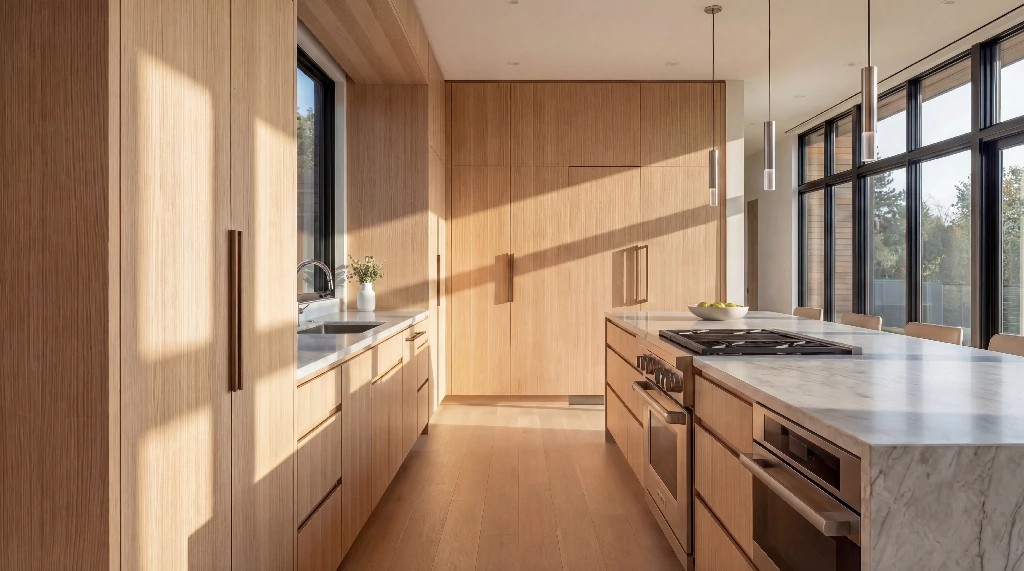
Oak Hardwood Plywood offers a more pronounced grain pattern and higher hardness. It is commonly selected for flooring substrates, heavy-duty furniture, and architectural applications where durability and visual impact are equally important.
Other Common Species
Other hardwoods such as birch, walnut, and cherry are also used depending on regional availability and design requirements. Each species contributes unique characteristics in terms of density, grain pattern, and finishing compatibility.
Manufacturing Process: From Log to Engineered Panel
Understanding how hardwood plywood is manufactured provides deeper insight into its performance advantages.
Log Selection and Veneer Peeling
High-quality logs are selected and processed through rotary peeling or slicing to produce thin veneers. The quality of these veneers directly affects the final panel’s strength and appearance.
Drying and Grading
Veneers are dried to a controlled moisture content and graded based on defects, grain consistency, and thickness uniformity.
Layer Assembly and Pressing
The veneers are stacked in alternating grain directions and bonded using adhesives. The assembly is then subjected to hot pressing, where heat and pressure activate the adhesive and consolidate the layers into a single panel.
Finishing and Sanding
The final panels are sanded to achieve precise thickness and a smooth surface, ready for lamination, coating, or direct use.
Performance Advantages in Industrial Applications
Hardwood plywood is widely preferred in B2B sectors due to its engineered advantages over solid wood and other panel materials.
Dimensional Stability
The cross-grain construction reduces warping, twisting, and cracking, even in environments with fluctuating humidity.
Strength-to-Weight Ratio
Compared to solid hardwood, plywood offers comparable strength with reduced weight, making it easier to handle and install.
Versatility
Hardwood plywood can be cut, shaped, and finished in various ways, supporting a wide range of applications from structural components to decorative surfaces.
Cost Efficiency
By utilizing thin veneers instead of solid wood, manufacturers can optimize material usage while maintaining high performance.
Table 1: Comparison of Hardwood Plywood vs Solid Wood
| Property | Hardwood Plywood | Solid Hardwood |
|---|---|---|
| Dimensional Stability | High | Moderate |
| Strength Consistency | Uniform | Variable |
| Cost Efficiency | Higher | Lower |
| Moisture Resistance | Better (with proper adhesive) | Susceptible |
| Processing Flexibility | Excellent | Limited |
Contact us today to discuss your project requirements and get expert recommendations.
How to Select the Right Hardwood Plywood for Your Business
Choosing the right hardwood plywood involves aligning material properties with application requirements.
Application-Based Selection
For furniture manufacturing, aesthetic quality and surface finish are critical. In contrast, construction applications prioritize strength and moisture resistance.
Grade and Certification
Buyers should evaluate grading standards, such as face veneer quality and core composition, as well as certifications related to emissions and sustainability.
Thickness and Customization
Panel thickness and layer configuration can be customized to meet specific load-bearing or design requirements.
Supplier Reliability
Working with an experienced manufacturer ensures consistent quality, technical support, and supply chain stability.
FAQ: Hardwood Plywood Explained for Buyers
What is hardwood plywood made of in simple terms?
It is made of multiple thin layers of hardwood veneers glued together with alternating grain directions to improve strength and stability.
Is hardwood plywood stronger than solid wood?
In many cases, yes. Its engineered structure provides more consistent strength and better resistance to environmental changes.
Can hardwood plywood be used outdoors?
It can be used in semi-exterior conditions if manufactured with waterproof adhesives, but it is not a full replacement for marine-grade plywood unless specifically designed.
What thickness options are available?
Common thicknesses range from 3mm to 25mm, but custom specifications are often available for industrial orders.
How do I ensure quality when sourcing?
Check veneer grade, core structure, adhesive type, and supplier certifications. Request samples and technical data sheets when possible.
About Voyage
Voyage is a professional manufacturer specializing in high-quality hardwood plywood solutions for global B2B clients. With advanced production lines, strict quality control systems, and flexible customization capabilities, Voyage delivers reliable materials tailored to furniture, construction, and interior design industries. Our commitment is not just to supply panels, but to provide engineered solutions that support your business growth and product excellence.
References