How to Install Hardwood Flooring on Plywood: What Do B2B Buyers and Contractors Need to Know?
April 8, 2026
Yes, hardwood flooring can be installed on plywood, and in fact, plywood subfloors are one of the most common and reliable bases for hardwood flooring systems. When properly prepared, plywood provides the structural stability, fastening strength, and moisture balance required for long-term performance. For example, in residential and commercial projects across North America, contractors routinely install nail-down or glue-down hardwood flooring over plywood subfloors to achieve durable and aesthetically consistent results. However, successful installation depends on correct subfloor selection, moisture control, fastening methods, and compliance with technical standards.
This guide is designed for distributors, contractors, and project decision-makers who need a clear, technical roadmap for installing hardwood flooring on plywood while optimizing material sourcing and installation quality.
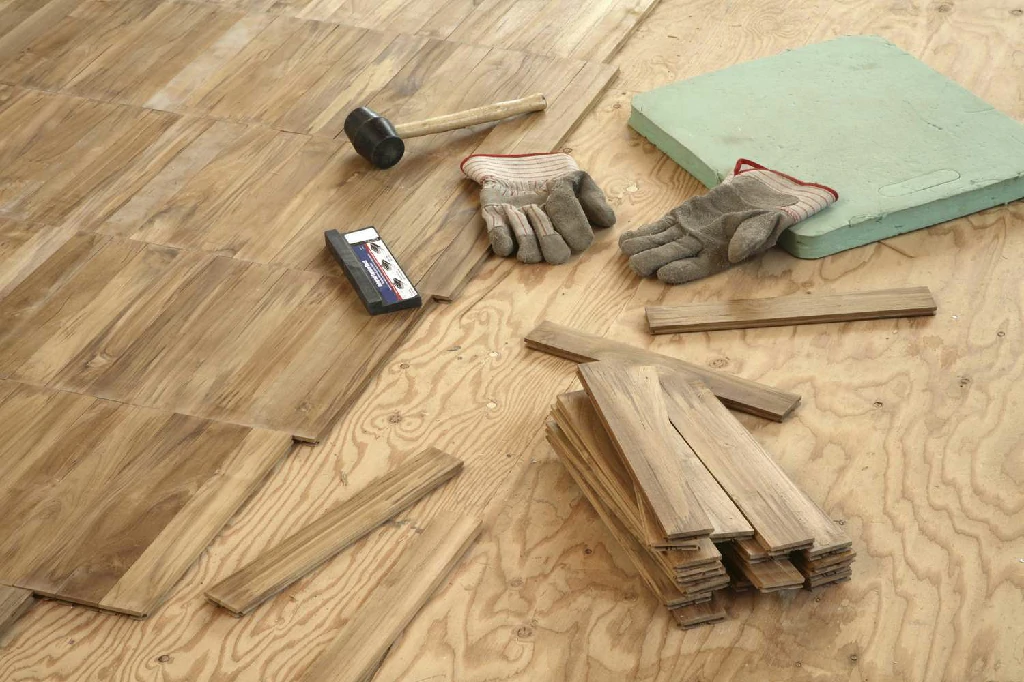
Understanding Plywood as a Subfloor for Hardwood Flooring
Plywood acts as the structural intermediary between the building frame and the finished hardwood surface. Its layered construction delivers dimensional stability and load distribution, making it ideal for supporting hardwood flooring.
Why Plywood Is Preferred
- Cross-laminated veneer structure minimizes expansion and contraction
- High screw and nail holding capacity
- Compatible with multiple installation methods (nail-down, glue-down, floating systems)
Premium-grade materials such as hardwood veneer plywood provide a smoother and more uniform surface, which improves installation precision and reduces finishing defects.
Recommended Thickness and Grade
For most hardwood flooring applications:
- Minimum thickness: 18 mm (3/4 inch)
- Grade: Exterior or Exposure 1 plywood
- Surface: Sanded and free of major voids
Using substandard plywood can result in squeaking floors, uneven surfaces, and reduced lifespan.
Preparing the Plywood Subfloor for Installation
Preparation is where many installations succeed or fail. Even high-quality hardwood flooring cannot compensate for a poorly prepared subfloor.
Moisture Testing and Control
Moisture is the silent saboteur of flooring systems. Before installation:
- Measure moisture content of plywood (typically 6–12%)
- Ensure moisture difference between plywood and hardwood flooring is within 2–4%
- Use vapor barriers when required
For environmentally compliant projects, materials like CARB P2 hardwood plywood ensure both low emissions and consistent performance.
Surface Inspection and Leveling
The plywood surface must be:
- Flat within 3 mm over 3 meters
- Free from debris, oil, or adhesives
- Securely fastened to the joist system
Any irregularities should be sanded or filled before proceeding.
Acclimation Process
Both plywood and hardwood flooring should acclimate to the installation environment for at least 48–72 hours. This reduces the risk of post-installation expansion or contraction.
Installation Methods for Hardwood Flooring on Plywood
Different project requirements call for different installation techniques. Selecting the right method ensures durability and efficiency.
Nail-Down Installation
This is the most traditional and widely used method.
Steps include:
- Position flooring perpendicular to joists
- Use pneumatic nailers to secure boards into plywood
- Maintain consistent spacing and alignment
Best suited for solid hardwood flooring in residential and light commercial settings.
Glue-Down Installation
Used for engineered hardwood flooring or when additional stability is required.
Key considerations:
- Apply adhesive evenly using a notched trowel
- Work in manageable sections
- Ensure full contact between flooring and plywood
Floating Installation
In this method, flooring is not directly attached to plywood but rests on an underlayment.
Advantages include:
- Faster installation
- Easier replacement
- Suitable for multi-layer engineered flooring
Installation Tools and Material Requirements
| Category | Recommended Tools/Materials | Purpose |
|---|---|---|
| Measurement | Moisture meter, level | Ensure proper conditions |
| Surface Preparation | Sander, filler compound | Achieve flat subfloor |
| Fastening | Pneumatic nailer, screws | Secure flooring |
| Adhesives | Urethane or polymer-based glue | Bond flooring to plywood |
| Finishing | Sealants, coatings | Protect surface |
Table: Essential tools and materials for installing hardwood flooring on plywood
Common Challenges and How to Avoid Them
Even experienced contractors face challenges during installation. Identifying risks early improves project outcomes.
Subfloor Movement
Loose plywood panels can cause squeaks and instability.
Solution: Re-fasten plywood securely to joists before installation.
Moisture Imbalance
Excess moisture leads to warping or cupping of hardwood flooring.
Solution: Use moisture barriers and ensure proper acclimation.
Improper Fastening
Incorrect nail spacing or adhesive application reduces durability.
Solution: Follow manufacturer guidelines strictly.
Get expert support for your hardwood flooring and plywood sourcing needs here.
Sourcing High-Quality Plywood for Flooring Projects
Material quality directly impacts installation success and long-term performance.
Evaluating Suppliers
Reliable hardwood plywood manufacturers should provide:
- Consistent thickness and density
- Certification compliance (CARB, FSC)
- Custom specifications for large-scale projects
Cost Efficiency and Trade Advantages
For global buyers, sourcing strategies matter. Options such as hardwood plywood low tariffs can significantly reduce procurement costs while maintaining product quality.
Logistics and Packaging
Ensure suppliers offer:
- Moisture-protected packaging
- Damage-resistant palletization
- On-time delivery for project schedules
Best Practices for Long-Term Flooring Performance
Proper installation is only the beginning. Maintenance and environmental control extend the life of hardwood flooring systems.
Environmental Control
Maintain indoor humidity between 35% and 55% to prevent wood movement.
Routine Inspection
Check for early signs of wear, moisture intrusion, or structural movement.
Protective Finishing
Use high-quality sealants and coatings to protect against abrasion and moisture.
FAQ: Installing Hardwood Flooring on Plywood
Can hardwood flooring be installed directly on plywood?
Yes, plywood is one of the most suitable subfloors for hardwood flooring when properly prepared and installed.
What thickness of plywood is required?
Typically, 18 mm (3/4 inch) plywood is recommended for adequate structural support.
Is glue-down or nail-down better?
It depends on the flooring type. Solid hardwood usually uses nail-down, while engineered flooring often uses glue-down methods.
Do I need a vapor barrier over plywood?
In many cases, yes, especially in مناطق with high humidity or moisture risk.
How long does installation take?
For standard projects, installation can take 2–5 days depending on area size and method.
About Voyage
Voyage is a professional supplier of high-performance wood panel products, serving global distributors, contractors, and project developers. With a focus on precision manufacturing, strict quality control, and international compliance, Voyage delivers hardwood plywood solutions tailored for flooring, construction, and architectural applications. The company combines advanced production capabilities with flexible customization to meet the evolving needs of modern building projects.
References