What Is the Best Type of Flooring for High-Traffic Areas?
October 31, 2026
Choosing the best flooring for high-traffic areas is about more than finding a material that looks attractive. In commercial buildings, public spaces, residential entrances, hospitality facilities, and outdoor environments, flooring must withstand repeated foot traffic, resist daily wear, remain easy to maintain, and retain its appearance over time.
The right flooring can reduce maintenance demands, extend the service life of a space, and create a better experience for everyone who uses it. However, not every flooring material performs equally well under heavy use. Some options excel in scratch resistance, while others offer better moisture resistance, impact absorption, or long-term value.
So, what is the best type of flooring for high-traffic areas?
The answer depends on where the flooring will be installed, how frequently people use the space, and what performance requirements matter most. This guide compares popular flooring materials, explains the factors that influence durability, and helps you choose a practical solution for your project.
What Makes Flooring Suitable for High-Traffic Areas?
High-traffic flooring must handle more demanding conditions than flooring installed in lightly used rooms.
For example, a residential hallway may experience regular foot traffic, while a shopping center entrance can face thousands of daily visitors. A hotel corridor must withstand luggage wheels, cleaning equipment, and continuous movement. Outdoor walkways also need to deal with weather exposure, moisture, and temperature changes.
When evaluating flooring for these environments, consider the following factors.
1. Wear and Abrasion Resistance
Foot traffic gradually wears down flooring surfaces. Shoes, grit, furniture movement, and cleaning equipment can cause scratches, scuffs, and surface deterioration.
The best flooring for busy spaces should resist abrasion and maintain its appearance despite repeated use.
2. Moisture and Water Resistance
Moisture can damage flooring, cause swelling, or create maintenance problems.
For commercial entrances, kitchens, outdoor walkways, and other moisture-prone areas, water resistance is particularly important.
3. Impact Resistance
Heavy objects, dropped equipment, furniture, and wheeled carts can damage flooring surfaces.
A suitable material should withstand the impact conditions expected in the intended environment.
4. Maintenance Requirements
High-traffic spaces need regular cleaning. Flooring that requires frequent polishing, refinishing, or specialized treatment can increase long-term operating costs.
Easy-to-clean surfaces are particularly valuable in commercial and public environments.
5. Long-Term Cost
The lowest initial purchase price does not always represent the lowest total cost.
Installation, maintenance, repairs, replacement frequency, and downtime all influence the overall investment.
6 Best Flooring Types for High-Traffic Areas
Different flooring materials offer different advantages. The following options are commonly considered for busy residential, commercial, and outdoor spaces.
1. Porcelain and Ceramic Tiles
Porcelain and ceramic tiles are popular choices for high-traffic indoor areas because they offer a hard surface, good abrasion resistance, and straightforward cleaning.
They are suitable for:
- Shopping centers
- Hotel lobbies
- Restaurants
- Public corridors
- Commercial entrances
Porcelain tiles generally offer lower water absorption than conventional ceramic tiles, making them a practical option for areas exposed to moisture.
However, tile floors can feel hard underfoot, and dropped objects may break. Grout lines also require attention during cleaning.
For projects where a rigid, hard-wearing surface is the priority, porcelain tile is worth considering.
2. Luxury Vinyl Flooring
Luxury vinyl flooring, including LVT and some rigid-core vinyl products, offers a balance of durability, comfort, and design flexibility.
It is commonly used in:
- Retail stores
- Offices
- Healthcare facilities
- Residential hallways
- Hospitality interiors
Vinyl flooring can provide a wood or stone appearance without the same maintenance requirements as natural materials.
Its performance depends on the product construction, wear layer, installation method, and suitability for the intended traffic level.
For busy spaces, select commercial-grade products with documented performance specifications rather than relying on appearance alone.
3. Concrete Flooring
Concrete flooring is widely used in industrial and commercial environments where strength and load-bearing performance are important.
Common applications include:
- Warehouses
- Manufacturing facilities
- Workshops
- Garages
- Distribution centers
Concrete can withstand substantial loads, especially when designed and finished for the intended use.
Nevertheless, untreated concrete may generate dust, absorb stains, or develop surface damage. Protective coatings, polishing, or other finishing treatments can improve its performance and appearance.
Concrete is a practical option for heavy-duty environments, although it may not provide the comfort or decorative appeal required in every space.
4. Hardwood Flooring
Hardwood flooring offers a natural appearance and a premium interior finish.
It can work well in:
- Residential living areas
- Boutique hotels
- Offices
- Retail interiors
However, hardwood requires careful consideration in high-traffic environments.
The wood species, surface finish, installation quality, and maintenance routine all influence its durability. Some hardwood floors can be refinished to restore their appearance, but they remain vulnerable to moisture and surface scratches.
For commercial projects, hardwood is often selected when aesthetics and interior design are important alongside performance.
5. WPC Flooring
Wood-plastic composite (WPC) flooring combines wood-based materials with polymers to create a composite product.
Depending on its formulation and construction, WPC flooring can offer a balance of durability, moisture resistance, dimensional stability, and design flexibility.
WPC products are particularly relevant for outdoor and semi-outdoor flooring applications, including:
- Garden walkways
- Residential patios
- Outdoor leisure areas
- Hotel terraces
- Commercial outdoor spaces
Unlike conventional timber, suitable WPC products do not require the same routine painting or wood-preservative treatment.
However, WPC performance varies by product design, material formulation, surface structure, and installation conditions.
For outdoor high-traffic projects, WPC decking is worth evaluating when the project requires a composite surface designed for outdoor use.

6. Laminate Flooring
Laminate flooring offers a decorative surface with a wide range of wood and stone designs.
It is frequently used in residential and selected commercial interiors because it can provide an attractive appearance at a competitive cost.
Laminate flooring may be suitable for:
- Living rooms
- Bedrooms
- Offices
- Light commercial interiors
For high-traffic applications, product selection is critical.
Consider the abrasion rating, surface protection, locking system, and moisture resistance. Standard laminate flooring may not be suitable for areas exposed to frequent water or demanding outdoor conditions.
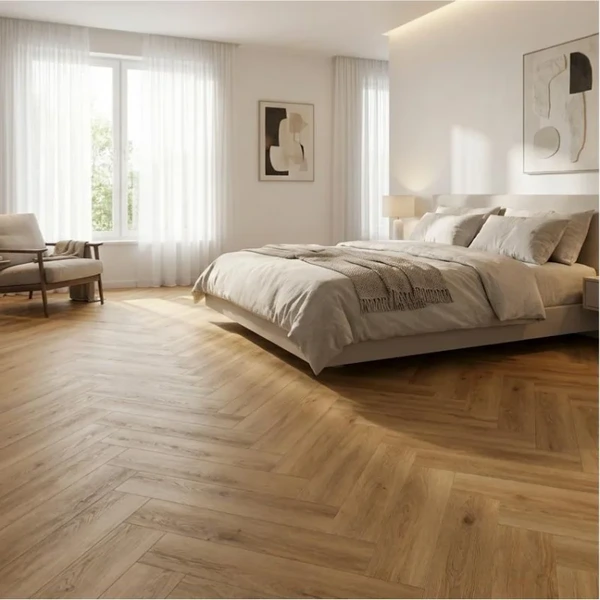
Voyage’s EIR laminate flooring is a relevant option for projects seeking a natural wood appearance.
Flooring Comparison: Which Material Performs Best?
The following table provides a general comparison of common flooring materials.
| Flooring Type | Wear Resistance | Moisture Resistance | Maintenance | Typical Applications |
|---|---|---|---|---|
| Porcelain tile | High | High | Low to moderate | Commercial interiors, entrances |
| Luxury vinyl | Moderate to high | High, depending on product | Low | Retail, offices, hospitality |
| Concrete | High | Depends on finish | Low to moderate | Industrial, warehouses |
| Hardwood | Depends on species and finish | Low to moderate | Moderate to high | Premium residential, hotels |
| WPC flooring | Depends on product construction | Generally good for suitable products | Low to moderate | Outdoor and leisure spaces |
| Laminate | Depends on wear rating | Product-dependent | Low | Residential, light commercial |
No single material is best for every high-traffic environment.
The most suitable choice is the one that meets the project’s actual traffic, moisture, maintenance, and design requirements.
How to Choose Flooring for Different High-Traffic Areas
Commercial Buildings and Shopping Centers
Commercial spaces require flooring that can withstand continuous foot traffic while maintaining a clean, professional appearance.
Porcelain tiles, commercial-grade vinyl, and suitable concrete finishes are common options.
For outdoor commercial areas, WPC decking may be considered for pedestrian walkways, terraces, and leisure spaces.
Hotels and Hospitality Facilities
Hotels need flooring that balances durability with guest comfort and visual appeal.
Lobby areas may benefit from tile or other hard-wearing surfaces, while corridors and guest rooms may require materials that provide a quieter, more comfortable experience.
Outdoor dining areas, poolside walkways, and terraces require additional attention to moisture management and slip resistance.
Residential Hallways and Entryways
Residential entrances experience concentrated foot traffic, dirt, and moisture brought in from outside.
Porcelain tile and suitable vinyl products are practical indoor choices. For outdoor entry paths, project-specific WPC decking can offer an alternative to conventional timber.
Outdoor Walkways and Garden Areas
Outdoor flooring faces additional challenges, including rain, sunlight, temperature changes, and seasonal expansion or contraction.
When choosing outdoor flooring, evaluate:
- Weather resistance
- Slip resistance under expected conditions
- Drainage and ventilation
- Structural support requirements
- Thermal movement
- Cleaning and maintenance needs
For these applications, WPC decking products can be considered as an alternative to traditional wood decking.
Is WPC Flooring a Good Choice for High-Traffic Areas?
WPC flooring can be a practical choice for selected high-traffic applications, particularly in outdoor and leisure environments.
Its performance depends on the product’s composition, profile design, surface treatment, and installation system.
Advantages of WPC Flooring
Moisture resistance
Suitable WPC products can perform well in outdoor environments where conventional wood may require more frequent protective treatments.
Reduced routine maintenance
Many WPC decking products do not require regular painting or staining, although cleaning and periodic inspection remain necessary.
Design flexibility
WPC can be manufactured in different colors, textures, profiles, and surface finishes to suit different architectural styles.
Outdoor application potential
Composite decking can be used in suitable outdoor projects, including patios, terraces, walkways, and leisure spaces.
What Should Buyers Check?
WPC is not a universal solution for every high-traffic floor.
Before purchasing, check:
- Whether the product is designed for the intended indoor or outdoor application
- The recommended load and joist spacing
- The surface’s slip-resistance performance
- The product’s weathering and UV resistance
- Installation and expansion requirements
- Applicable test reports and technical specifications
For example, a pedestrian walkway and a vehicle-accessible platform have different structural requirements.
The correct product must match the actual loading and installation conditions.
Co-Extruded WPC Decking for Demanding Outdoor Applications
For outdoor projects where surface durability and appearance are important, co-extruded WPC decking is another option to consider.
Co-extrusion involves combining materials into a composite profile with an outer protective layer.
Depending on the product construction, this surface layer may provide additional protection against staining, fading, and everyday surface wear.
Voyage offers round-hole co-extruded WPC decking for outdoor decking applications.
When evaluating this type of product, buyers should consider the intended environment, traffic intensity, installation conditions, and product-specific performance data.
The right decking system should deliver the required performance without unnecessary material or installation costs.
How to Reduce Flooring Maintenance in High-Traffic Areas
Even durable flooring needs proper maintenance.
A practical maintenance plan can help preserve surface appearance and reduce premature damage.
1. Choose Flooring Based on Actual Traffic
Do not select flooring based solely on residential specifications when the project involves commercial traffic.
Match the product’s performance rating and technical documentation to the expected usage.
2. Use Entrance Mats
Entrance mats help capture dirt, sand, and moisture before they reach the main flooring surface.
This can reduce abrasion and cleaning requirements.
3. Clean Regularly
Use cleaning products suitable for the flooring material.
Avoid harsh chemicals or abrasive tools that may damage the surface finish.
4. Follow Installation Requirements
Incorrect installation can lead to movement, gaps, cracking, or premature wear.
Follow the manufacturer’s installation instructions, including subfloor preparation, spacing, fastening, and expansion allowances.
5. Inspect High-Wear Zones
Entrances, corners, transition areas, and frequently used pathways often experience more wear than other parts of the floor.
Regular inspection helps identify problems before they require major repairs.
Final Recommendation: What Is the Best Flooring for High-Traffic Areas?
The best flooring for high-traffic areas depends on the application.
For commercial interiors, porcelain tile and commercial-grade vinyl are practical options.
For industrial environments, concrete may be the most suitable solution.
For premium interiors, hardwood can work when the project accepts its maintenance requirements.
For outdoor walkways, terraces, and leisure areas, suitable WPC decking can provide a balance of durability, moisture resistance, and design flexibility.
If your project involves outdoor flooring, explore Voyage’s WPC solutions to compare available product options.
For projects involving exterior walls as well as flooring, WPC wall panels can also be considered as part of a coordinated outdoor design.
Ultimately, choosing the right flooring means looking beyond the initial appearance and price.
Evaluate the traffic conditions, installation requirements, maintenance expectations, and long-term performance of each option. With the right material and installation system, high-traffic flooring can remain functional, attractive, and cost-effective throughout its service life.
Frequently Asked Questions
What is the most durable flooring for heavy foot traffic?
Porcelain tile, commercial-grade vinyl, and properly finished concrete are common durable options for indoor high-traffic areas. For outdoor pedestrian spaces, suitable WPC decking may also be considered.
The best choice depends on the traffic intensity, environmental conditions, and product specifications.
What flooring is easiest to maintain in commercial buildings?
Porcelain tile, suitable commercial vinyl, and finished concrete are generally easy to clean.
Outdoor composite decking may also reduce routine maintenance compared with conventional timber, depending on the product and installation.
Is WPC decking suitable for commercial outdoor walkways?
WPC decking can be suitable for commercial outdoor walkways when the selected product is designed for the expected traffic and loading conditions.
Buyers should verify the product’s structural requirements, slip resistance, installation system, and relevant performance data before specifying it.
How can I select flooring for a high-traffic outdoor project?
Start by evaluating pedestrian traffic, weather exposure, drainage, structural loads, slip resistance, and maintenance requirements.
Then compare suitable products based on their technical specifications, installation requirements, and expected service conditions.
Is laminate flooring suitable for high-traffic commercial areas?
Some laminate products are designed for demanding interior applications, but not every laminate floor is suitable for heavy commercial traffic.
Check the product’s abrasion classification, moisture resistance, and recommended application before purchasing.