How to Specify Laminate Flooring for Different Markets: A B2B Buyer’s Guide
September 1, 2026
A laminate flooring specification that works well for a residential renovation in North America may not be the best specification for a hotel project in the Middle East or a residential development in Central Asia. For B2B buyers, the real question is not simply, “Which laminate flooring is cheapest?” It is: “Which construction, surface, size and performance profile is right for my market, application and price position?”
That distinction is becoming more important as buyers balance realistic wood appearance, wear resistance, moisture performance, longer and wider formats, installation requirements, emissions documentation and international supply reliability. Current 2026 industry reporting points to continued interest in natural oak visuals, warmer neutral colors, matte finishes, herringbone and wide-plank formats, while market research shows renovation remains important in North America and the Middle East and Africa are among the faster-growing regional demand pools.
This guide is therefore structured around the decisions a professional B2B buyer must make before comparing supplier quotations: application, wear class, core construction, moisture performance, surface technology, design, market requirements and landed economics. Drawing on Voyage’s experience supporting international distributors, project buyers and private-label flooring programs, it explains how to turn market requirements into a workable laminate flooring specification.
1. Start With the Application, Not the Price
The first specification question should be where the floor will be installed. Residential bedrooms, rental apartments, retail stores, hotel corridors and office projects do not create the same combination of traffic, cleaning frequency, scratch risk and visual expectations.
- Residential: prioritize balanced wear resistance, realistic wood appearance, easy installation and value.
- Rental and multi-family housing: consider AC4 or AC5 where higher traffic and frequent turnover increase surface-wear risk.
- Retail, hospitality and busy commercial areas: AC5 is often the more logical starting point when traffic, maintenance and appearance retention are important.
- Public corridors and project spaces: evaluate wear rating together with joint performance, dimensional stability, moisture exposure and cleaning conditions.
The B2B lesson is simple: do not specify the same product for every project simply because it is the supplier’s best-selling SKU. A better procurement program may use two or three performance tiers for different applications, allowing the buyer to protect margin without over-specifying every project.
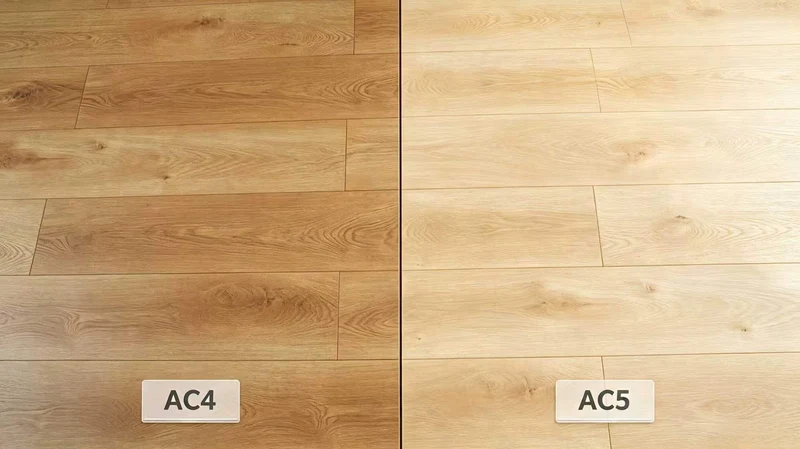
2. AC4/Class 32 or AC5/Class 33? Match Wear Resistance to the Project
AC4 and AC5 should be treated as part of a performance specification, not as a universal quality ranking. In common market practice, AC4 is typically associated with Class 32 for heavy residential and general commercial use, while AC5 is commonly associated with Class 33 for heavier commercial applications.
For many residential and light commercial programs, AC4/Class 32 can provide an effective balance between performance and cost. AC5/Class 33 becomes more compelling when the floor is expected to handle heavier foot traffic or when the buyer wants a stronger commercial specification.
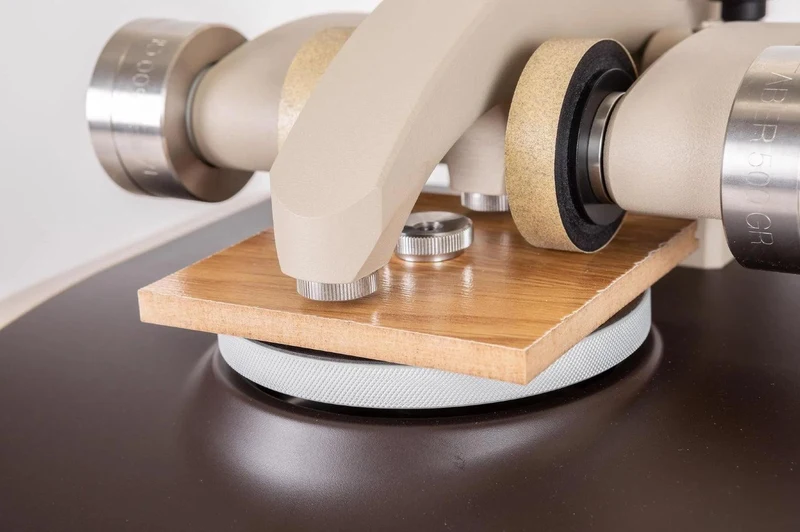
However, the AC rating mainly evaluates surface abrasion resistance and should not be used as the only quality criterion. Buyers should also compare the HDF core, locking system, dimensional stability, moisture performance and supporting test documentation.
3. Thickness Is More Than an 8 mm vs. 12 mm Decision
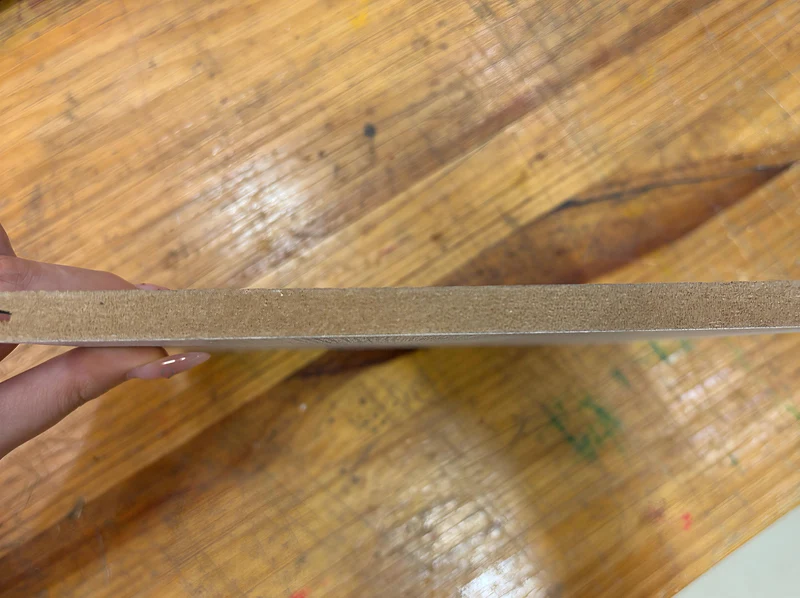
Thickness is one of the easiest specifications to compare, but it is also one of the easiest to oversimplify. An 8 mm board is not automatically a low-quality product, and a 12 mm board is not automatically the best product for every project.
A professional specification should consider thickness together with HDF density, moisture resistance, dimensional tolerance, locking-system performance, surface construction and the intended installation environment.
- 8 mm: often suitable for cost-sensitive residential and renovation programs when the rest of the construction is properly controlled.
- 10 mm: a useful middle position for buyers seeking a stronger perceived specification without moving to the highest thickness tier.
- 12 mm: supports premium positioning and a more substantial feel, but buyers should confirm that the added material cost creates a meaningful project benefit.
For international procurement, specify actual board thickness tolerance rather than only the nominal thickness. A small dimensional difference repeated across a large project can affect installation, locking performance and the buyer’s final quality perception.
4. Waterproof vs. Water-Resistant: What Should Buyers Actually Specify?
“Waterproof laminate flooring” is an important search and product-positioning term, but B2B buyers should be more precise than a marketing label. The practical question is how the complete floor system performs when exposed to moisture.
- HDF core: assess moisture resistance and swelling behavior.
- Edges and joints: evaluate how the locking system handles moisture at plank connections.
- Surface and finish: confirm resistance to routine cleaning and household spills.
- Installation: define permitted moisture conditions, subfloor requirements and installation method.
- Test evidence: ask for the actual test method, exposure time and performance result behind any waterproof or water-resistant claim.
This matters because moisture performance can broaden the usable application range of laminate, but installation quality still determines how well the system performs in practice. Current market reporting also identifies improved moisture and waterproof performance as part of laminate’s competitive positioning in 2026.
5. EIR: Why Texture Is Becoming a Major Design Specification
B2B buyers increasingly need to specify more than “oak look” or “wood look.” The surface itself has become part of the product’s value proposition. EIR, or Embossed-In-Register, aligns tactile embossing with the printed grain pattern, creating a more convincing wood effect.
That is especially relevant when laminate is positioned as a hardwood alternative rather than an entry-level floor. The European Producers of Laminate Flooring (EPLF) reports continued interest in realistic wood visuals, natural textures, matte and ultra-matte finishes, warmer oak palettes, longer and wider planks, and geometric formats such as herringbone and chevron.
- Natural and warm oak tones: broad international appeal and strong alignment with current interior trends.
- Matte and low-sheen surfaces: support a more natural wood impression and a contemporary commercial look.
- EIR: valuable when the buyer wants printed grain and tactile texture to tell the same visual story.
- Collection consistency: color, grain scale, plank variation and gloss level should work together across the range.
6. Herringbone, Wide Planks and Natural Oak: Design Is Now a B2B Specification
Design trends are not only a retail concern. For importers and project buyers, they determine which SKUs deserve inventory space and which products can support a premium price position. Current 2026 trend reporting highlights natural oak, warm and neutral colors, matte finishes, longer and wider planks, herringbone and chevron patterns.
A practical B2B collection strategy is to maintain a dependable core of mainstream plank designs while adding a smaller premium range of statement formats and textures. This creates a portfolio that is easier to stock, easier to explain and less exposed to trend risk.
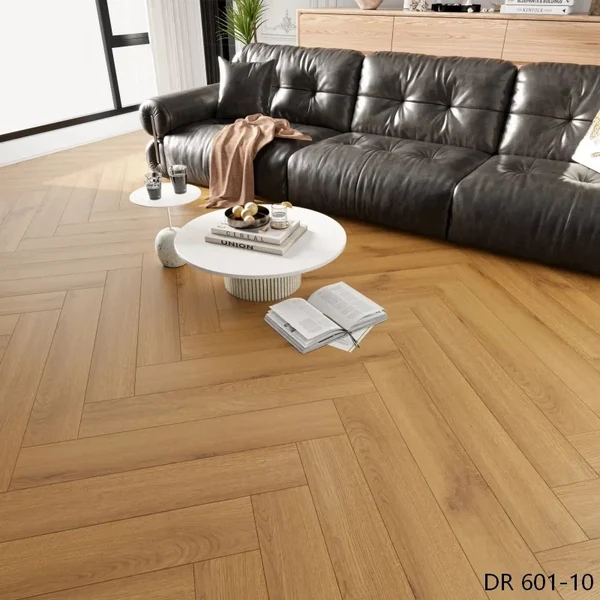
Herringbone laminate flooring can create a useful premium tier because the visual impact is stronger than standard plank installation. However, buyers should confirm plank dimensions, left/right pieces where required, installation instructions, carton configuration, replacement-piece strategy and the consistency of pattern alignment before committing to volume.
7. How the Specification Should Change by Market
North America: Performance, Renovation and Documentation
North America should be treated as a performance-conscious and highly competitive market rather than simply a large-volume destination. IMARC Group estimates that the North American laminate flooring market reached 146.0 million square meters in 2025 and forecasts continued growth through 2034. At the same time, Floor Covering News reported that U.S. first-point-of-distribution laminate sales declined in 2025, highlighting continued competition from other flooring categories.
- Residential and remodeling: prioritize scratch resistance, realistic wood visuals and installation convenience.
- Family and pet households: stronger wear and surface performance can be commercially meaningful.
- Commercial projects: AC5, moisture performance, joint quality and consistent batch production deserve more attention.
- Documentation: for U.S.-bound programs, confirm that the HDF core and finished flooring meet applicable TSCA Title VI formaldehyde-emissions, labeling and documentation requirements before production.
The commercial implication is important for a new international supplier: competing only on price is rarely enough. A clearer product story—performance plus design plus documentation—can give distributors and project buyers a stronger reason to switch suppliers.
Central Asia: Price-Performance, Logistics and Reliable Supply
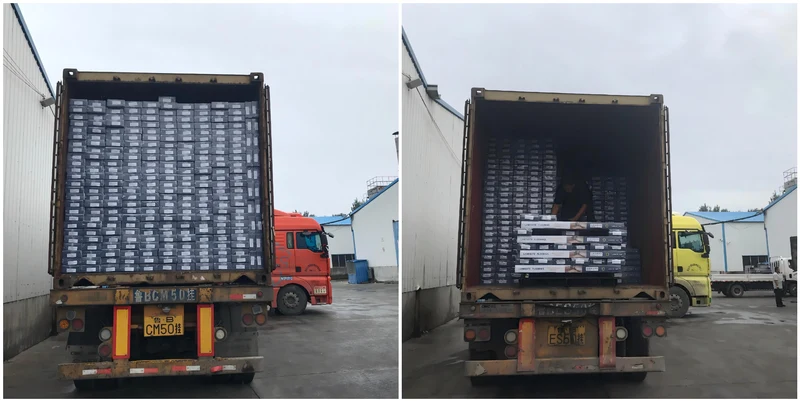
For many Central Asian distribution programs, product selection should be evaluated together with inland logistics. Long-distance transportation makes packaging strength, carton protection, container loading efficiency and repeat-order supply commercially important.
- Residential development: AC4 and practical 8–12 mm specifications can cover a broad part of the market.
- Premium residential and hospitality: consider AC5, EIR, warmer oak designs and herringbone formats.
- Packaging: confirm carton strength, palletization where applicable and protection against handling damage.
- Supply: agree on lead time, repeat-order color consistency and spare/replacement requirements before launch.
The key message for Central Asian buyers is that landed cost is more useful than factory price. A product that is slightly cheaper per square meter but suffers higher transport damage, inefficient loading or inconsistent repeat production may be the more expensive option in the real project.
Middle East: Commercial Projects, Design and Moisture Considerations
The Middle East should be approached through a combination of project performance and visual positioning. Mordor Intelligence projects the Middle East and Africa to be the fastest-growing regional laminate flooring market through 2031. This forecast should be treated as a directional indicator, since demand conditions vary considerably by country and project segment.
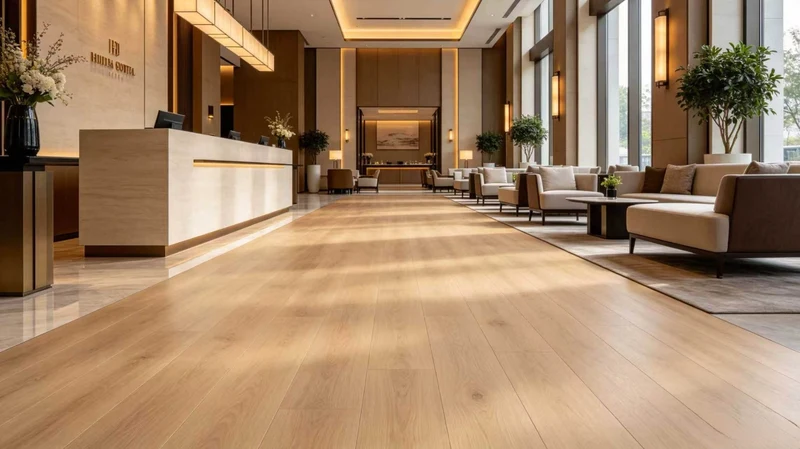
- Hotels, serviced apartments and commercial interiors: AC5 and stronger project specifications can be appropriate.
- Premium residential: warm oak, natural wood visuals, EIR and statement patterns can strengthen the design proposition.
- Moisture performance: define the actual test basis instead of communicating only a generic “waterproof” claim.
- Project consistency: color, texture, dimensions and batch-to-batch reproduction can matter as much as the initial sample.
For buyers targeting Gulf markets, the product brief should therefore combine durability, design and project consistency rather than treating the region as purely price-driven.
8. The B2B Laminate Flooring Specification Checklist
Before requesting a final quotation, convert the project brief into a written specification. The following checklist reduces price comparisons between products that are not actually equivalent.
- Application: residential, rental, retail, hospitality, office or public area.
- Wear class: AC4 or AC5, supported by appropriate test evidence.
- Nominal thickness and tolerance: for example 8, 10 or 12 mm with agreed dimensional tolerance.
- HDF construction: core density, moisture behavior and relevant quality requirements.
- Surface: decorative design, wear layer, EIR requirement, matte/gloss level and visual consistency.
- Moisture performance: water-resistant or waterproof claim, test method and installation limitations.
- Dimensions: plank length, width, thickness, squareness and locking profile.
- Packaging: carton quantity, gross/net weight, pallet requirements where applicable and container loading plan.
- Documentation: emissions/compliance documents and inspection records required by the destination market.
- Repeatability: color, texture, construction and packaging consistency for repeat orders.
9. Five Questions to Ask Before Placing an Order
1. What is the target market and intended application?
2. What wear rating and surface performance are actually required?
3. What thickness, HDF construction and dimensional tolerances are required?
4. What moisture, emissions and documentation requirements apply to the destination market?
5. Can the supplier maintain the same color, texture, construction and packaging standard on repeat orders?
These questions shift the procurement conversation from “What is your price?” to “Are we comparing equivalent products?” That is one of the most important changes a professional B2B buyer can make.
10. How to Compare Supplier Quotes on a Like-for-Like Basis
Once the product specification is fixed, supplier quotations become much easier to compare. Without a written specification, buyers often receive prices for products that look similar in a sample but differ in thickness, core density, surface construction, packaging, tolerances or testing. The lowest quotation can therefore become the highest-cost option after claims, rework or project delays.
- Compare the same thickness and tolerance, not simply “8 mm” or “12 mm” as a headline number.
- Compare the same wear rating and confirm what test evidence supports the AC classification.
- Compare HDF construction, moisture performance and swelling requirements rather than treating all HDF cores as equivalent.
- Compare surface technology, including EIR, matte level, gloss level and decorative-paper consistency.
- Compare plank dimensions, locking profile, carton quantity and total square meters per container.
- Compare documentation, inspection standards, replacement policy and repeat-order color consistency.
- For Central Asia and other long-distance markets, compare landed cost—not just factory price—by considering packaging, container utilization, transport damage risk and inland logistics.
11. Final Takeaway: Specify First, Negotiate Second
The right laminate flooring is not necessarily the thickest, highest-rated or most expensive product. It is the product whose construction, surface, moisture performance, design and compliance profile match the project and target market.
For North America, performance, renovation needs and documentation deserve close attention. For Central Asia, price-performance must be considered together with logistics and supply reliability. For the Middle East, commercial durability, design appeal and project consistency can create a stronger value proposition than low price alone.
For international buyers, the most effective sourcing process is therefore specification-led: define the application, set the performance requirements, confirm the design direction, document the tolerances and testing, then compare suppliers on a like-for-like basis.
Voyage supports importers, distributors and project buyers in developing market-specific laminate flooring programs, from mainstream residential collections to higher-performance commercial specifications, EIR surfaces, herringbone formats and customized packaging.
Need a laminate flooring specification for your target market?