How to Choose Cabinet Grade Plywood
May 22, 2026
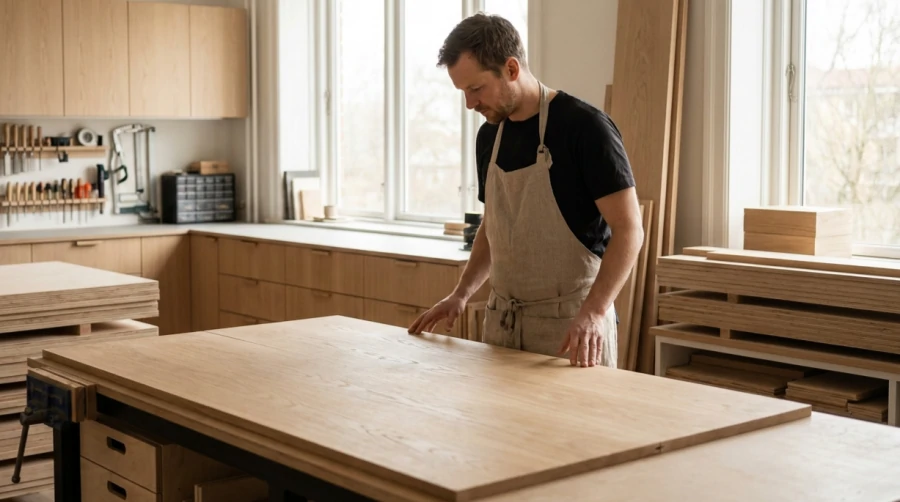
Walking into a lumberyard often feels like a costly guessing game. A $45 sheet of standard construction-grade wood sits beside a $110 sheet of cabinet-grade plywood, yet to the untrained eye, they look almost identical. According to experienced carpenters, picking the right board means thinking of wood like a sandwich. The outer layer provides the visual beauty, but the inner core dictates whether your high-quality plywood will hold heavy dishes or quickly warp.
Beyond those hidden layers, selecting cabinet-grade plywood requires accepting the “sanding tax.” Industry manufacturing standards dictate that a 3/4-inch sheet isn’t actually three-quarters of an inch thick. Factories sand that top veneer for a perfectly smooth finish, leaving the final board slightly thinner.
Decoding the Plywood ‘Report Card’: Why Face Grade A Isn’t Always the Right Choice
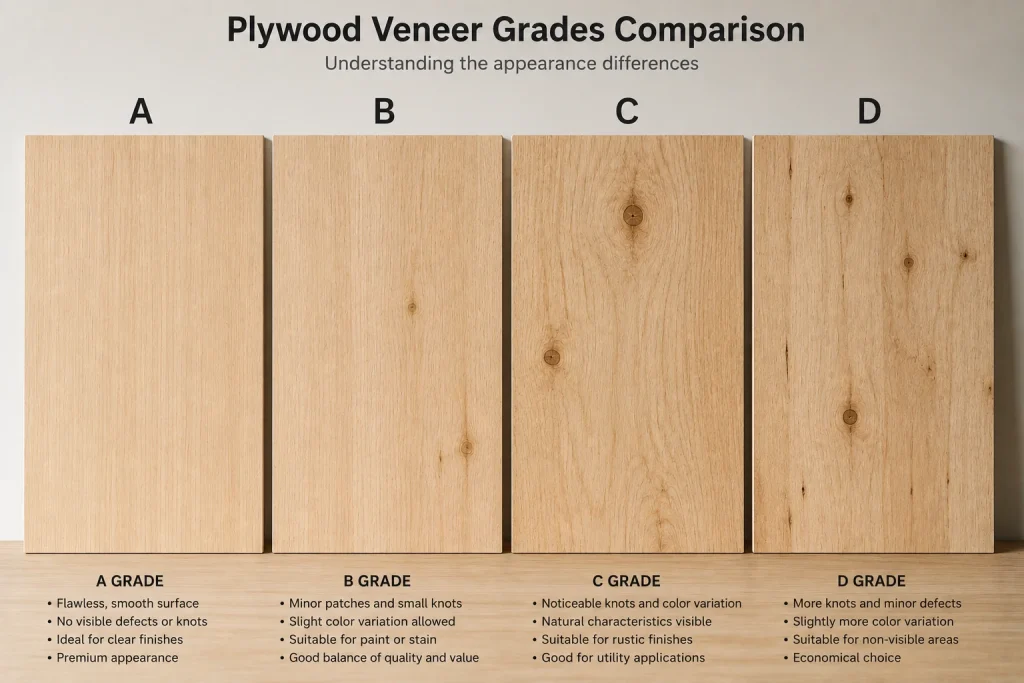
Staring at a stack of hardwood veneer plywood, you will usually spot edge stamps like “A-2” or “B-3.” Think of this as the wood’s report card. The letter is the “Face Grade”—the side everyone sees—while the number is the “Back Grade,” usually hidden inside a frame. Recognizing face and back veneer grades prevents overspending. If you plan to use paint, buying a flawless “A” board wastes cash on beauty you will quickly cover up. The best plywood for painted cabinets is typically a “B” face, easily saving you 20 to 30 percent at the register.
Decoding these surface scores is simple:
- A Grade: The valedictorian. Flawless and perfectly smooth for clear stains.
- B Grade: The runner-up. Minor blemishes or tiny knots easily patched for paint.
- C Grade: The average student. Noticeable color variations suited for utility shelves.
- D Grade: The bare minimum. Rough holes meant only for hidden structural work.
Beyond the grade, the manufacturing technique completely changes the visual appeal. Choosing rotary cut vs. plain sliced veneer comes down to the blade. Rotary cutting spins a log like unrolling paper towels, creating wide, wild grain swirls. Plain slicing cuts straight across the log, producing traditional, tight wood lines. The internal composition is just as critical as the exterior surface.
Veneer vs. MDF: Choosing the Right ‘Filling’ for Your Cabinet Sandwich
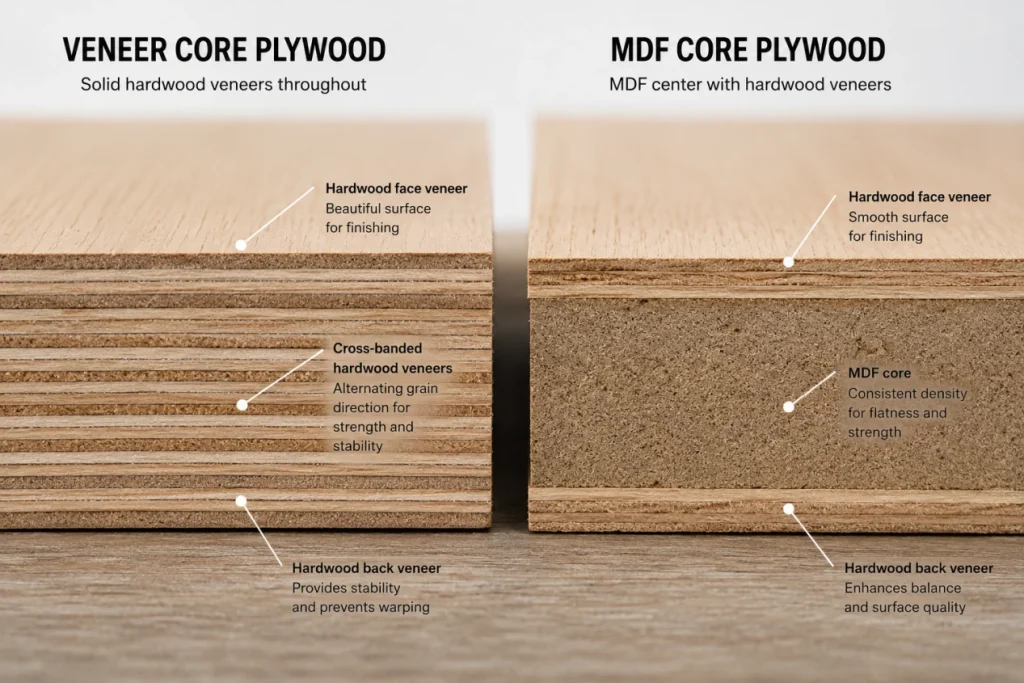
Peering at the edge of a board reveals the structural engine of your project. Standard plywood uses cross-banding—thin wood layers glued with the grain running in alternating directions. This crisscross pattern guarantees the structural stability of plywood cores, ensuring the wood remains strong under pressure. However, cheaper boards often hide gaps between these internal layers. Internal voids in plywood create empty pockets exactly where screws unexpectedly spin out or saw blades violently tear your newly cut edge.
Matching the internal layers to your project prevents costly DIY disasters. When weighing veneer core vs. MDF core cabinets, consider your project’s final application:
- Veneer Core: Made of alternating solid wood layers, making it lighter and highly rigid. This is your best choice for heavy-duty shelving that cannot sag under the weight of books or dishes.
- MDF Core: Features a center of Medium Density Fiberboard (compressed wood dust and resin). It is incredibly heavy but stays completely flat, making it ideal for smooth, warp-free painted doors.
Upgrading your materials can eliminate core anxiety entirely. When comparing Baltic Birch vs. domestic maple plywood, true Baltic Birch is the gold standard. Instead of a thick, cheap center, it features solid, uniform birch layers throughout, practically eliminating voids and delivering unmatched screw-holding power. Regardless of which core you select, the board must be flawlessly flat before bringing it home.
The Flashlight Test and Other Pro Tricks to Spot High-Quality Sheets
Standing in the lumber aisle, your first job is ensuring the board won’t curl like a potato chip. Knowing how to check plywood flatness saves you from wrestling warped wood later. Look down the sheet’s edge like aiming a pool cue to spot bowing (end-to-end curves) or cupping (side-to-side curves). Avoid discounted “shop grade” boards, which often harbor structural flaws and edge blowouts. When spotting high-quality furniture-grade wood, skip these budget traps entirely.
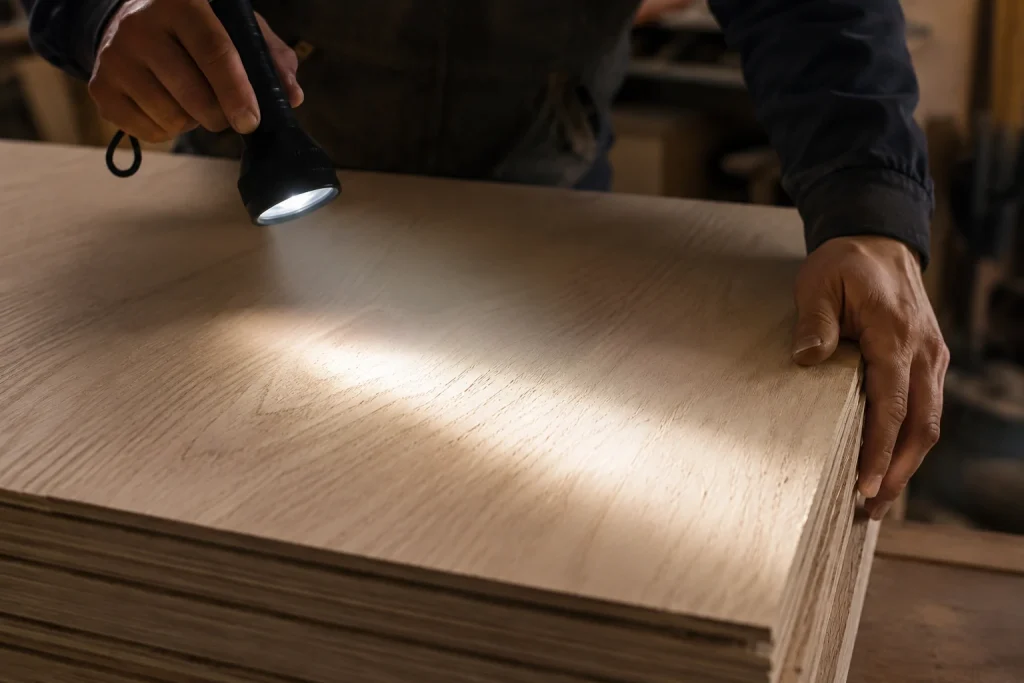
Once you verify a flat sheet, inspect the veneer using the Flashlight Test. To guarantee you bring home the smoothest plywood, lay your phone’s flashlight flat against the wood, shining the beam across the grain. This sharp angle instantly casts shadows over hidden ripples or tiny surface tears that overhead store lights mask. Catching these flaws prevents the heartbreak of discovering them after applying an expensive coat of glossy paint.
Always match the sheet’s capabilities to its intended room before checking out. Selecting moisture-resistant plywood for bathrooms prevents daily steam from swelling your beautiful new vanity doors. By taking five extra minutes to check the surface and verify suitability, you eliminate the most frustrating DIY setbacks.
From the Lumberyard to Your Living Room: Your Cabinet Plywood Action Plan
Just as a 2×4 isn’t exactly two by four inches, cabinet box material thickness shrinks during manufacturing. A 3/4-inch sheet is actually 23/32-inch due to factory sanding. When determining what size plywood for cabinets to use, account for this tiny difference so your joints align perfectly. Additionally, explore UV pre-finished plywood benefits; spending a little extra yields a factory-cured clear coat, letting you completely skip the staining nightmare.
Avoid wasting money on warping wood by running this 4-step checklist at the store:
- Grade: Ensure the face letter matches your project’s aesthetic needs.
- Core: Check the side profile for solid veneer or MDF layers.
- Flatness: Sight down the edge to confirm it is perfectly straight.
- Thickness: Verify the actual dimension fits your specific cut list.
Walking into the lumberyard is no longer an intimidating guessing game. Whether you are tackling a simple painted bookcase or sourcing flawless cabinet plywood for a kitchen overhaul, start your project confidently, picking a board that builds and finishes beautifully.