What Is Hardwood Plywood and Why Is It the Preferred Choice for Commercial Projects?
March 25, 2026
When professionals ask what is hardwood plywood, the answer goes far beyond a simple definition. Hardwood plywood is an engineered wood panel made by bonding thin layers of wood veneers together, with hardwood species used on the face and back layers. This layered construction creates a material that combines strength, dimensional stability, and aesthetic appeal—making it a top-tier choice for furniture manufacturing, interior fit-outs, cabinetry, and architectural applications.
For B2B buyers, understanding hardwood plywood is less about theory and more about performance, compliance, and long-term value. This article explores its structure, benefits, applications, and how to select the right specifications for your projects.
Understanding the Structure of Hardwood Plywood
Hardwood plywood is manufactured through a cross-lamination process where veneers are stacked with alternating grain directions. This technique minimizes expansion and contraction, improving stability under varying environmental conditions.
Key Components
- Face veneer: High-quality hardwood species such as oak, maple, or birch, providing visual appeal
- Core layers: Typically composed of hardwood, softwood, or mixed species for structural integrity
- Back veneer: Balances the panel and enhances durability
- Adhesives: Industrial-grade resins that determine moisture resistance and emissions performance
One of the most commonly specified options in commercial projects is hardwood veneer plywood, which combines premium surface aesthetics with a cost-effective core structure.
Manufacturing Process Overview
- Log selection and rotary cutting or slicing into veneers
- Drying to controlled moisture levels
- Adhesive application and layer assembly
- Hot pressing under high pressure and temperature
- Sanding and grading for surface quality
This process ensures uniform thickness, consistent bonding, and reliable performance across large production batches.
Key Advantages for B2B Buyers
Hardwood plywood is often described as the “workhorse with a polished suit” in the engineered wood category. It balances structural performance with visual sophistication.
Strength and Stability
Cross-laminated layers provide excellent load-bearing capacity and resistance to warping. Compared to solid wood, hardwood plywood maintains its shape even in fluctuating humidity.
Cost Efficiency
Using thin hardwood veneers over a composite core significantly reduces material costs while maintaining the appearance of solid hardwood.
Surface Versatility
Different veneer species allow manufacturers to meet diverse design requirements. Options like White oak veneer plywood are widely used in premium interiors due to their natural grain and durability.
Environmental Compliance
Modern production focuses heavily on emissions control. Products such as CARB P2 hardwood plywood meet strict formaldehyde emission standards, making them suitable for regulated markets like North America.
Common Applications Across Industries
Hardwood plywood is not confined to a single industry. Its adaptability makes it a staple material across multiple sectors.
Furniture Manufacturing
- Cabinets and wardrobes
- Office desks and workstations
- Hotel and residential furniture
Interior Decoration
- Wall paneling and partitions
- Ceiling systems
- Decorative cladding
Commercial Construction
- Retail fixtures
- Exhibition booths
- Architectural millwork
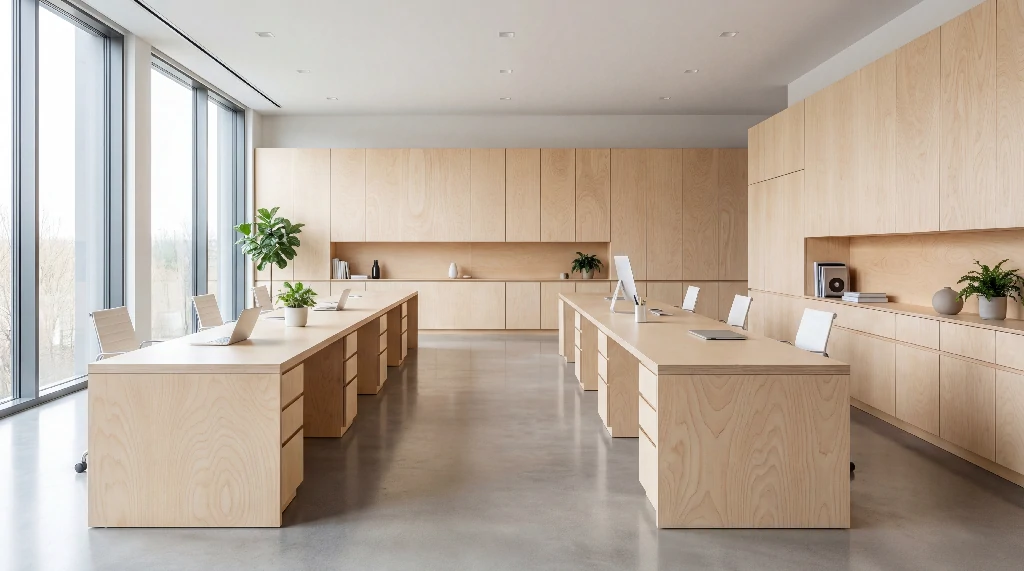
For example, Maple veneer plywood is often selected for modern office interiors due to its light tone and smooth finish, which enhances brightness and spatial perception.
Comparison Table: Hardwood Plywood vs Other Engineered Panels
Table 1: Performance Comparison of Common Wood Panels
| Property | Hardwood Plywood | MDF | Particle Board |
|---|---|---|---|
| Strength | High | Medium | Low |
| Moisture Resistance | Moderate to High | Low | Very Low |
| Surface Finish | उत्कृष्ट (natural wood) | Smooth (paint-ready) | Limited |
| Weight | Medium | Medium to Heavy | Light |
| Cost | Medium | Low | Very Low |
| Screw Holding Capacity | Excellent | Moderate | Poor |
This comparison highlights why hardwood plywood is often preferred in applications where both durability and appearance are critical.
How to Choose the Right Hardwood Plywood
Selecting the right specification is where procurement decisions become strategic rather than transactional.
Consider Veneer Grade
Higher-grade veneers (A or B grade) are suitable for visible surfaces, while lower grades can be used for structural or hidden applications.
Evaluate Core Type
- Hardwood core: बेहतर strength and screw holding
- Poplar core: Lightweight and cost-effective
- комбинированный core: Balanced performance and price
Check Certification and Standards
Look for compliance with standards such as:
- CARB P2 (California Air Resources Board)
- FSC (Forest Stewardship Council)
- ISO quality certifications
Assess Thickness and Dimensions
Common thicknesses range from 3mm to 25mm, depending on the application. Custom sizing may be required for large-scale projects.
Looking for project-specific recommendations? Contact us to get tailored hardwood plywood solutions for your business.
Procurement Considerations for Bulk Buyers
For wholesalers, distributors, and project contractors, sourcing hardwood plywood involves more than just product selection.
Supply Chain Reliability
Consistent supply ensures project timelines are met without delays. Manufacturers with integrated production lines offer better control over quality and delivery.
Customization Capabilities
- Veneer species selection
- Surface treatments (UV coating, sanding levels)
- Panel sizes and thicknesses
Quality Control Systems
Advanced manufacturers implement strict inspection protocols, including:
- Moisture content testing
- Bond strength evaluation
- Surface defect inspection
FAQ: Hardwood Plywood Explained
What is hardwood plywood made of?
It is made from multiple layers of wood veneers bonded together, with hardwood species used for the outer layers to provide strength and visual appeal.
Is hardwood plywood better than solid wood?
In many applications, yes. Hardwood plywood offers better dimensional stability, lower cost, and resistance to environmental changes compared to solid wood.
Can hardwood plywood be used in humid environments?
Yes, especially when manufactured with moisture-resistant adhesives. However, proper sealing and finishing are recommended for long-term durability.
What thickness should I choose?
It depends on the application. Thicker panels (18mm–25mm) are ideal for structural uses, while thinner panels (3mm–12mm) are suitable for decorative purposes.
Is hardwood plywood environmentally friendly?
When sourced from certified suppliers and compliant with standards like CARB P2 and FSC, it is considered a sustainable and eco-friendly material.
About Voyage
Voyage is a trusted manufacturer specializing in high-quality hardwood plywood solutions for global B2B markets. With a focus on precision manufacturing, strict quality control, and compliance with international standards, Voyage delivers products that meet the demanding requirements of furniture manufacturers, contractors, and distributors. From standard panels to customized veneer solutions, Voyage supports partners with reliable supply, consistent quality, and technical expertise.
References
- Wikipedia – Plywood: https://en.wikipedia.org/wiki/Plywood
- Forest Stewardship Council (FSC): https://fsc.org
- California Air Resources Board (CARB): https://ww2.arb.ca.gov