Hardwood Plywood Veneer Cuts Explained: How Cutting Methods Affect Grain, Material Yield and Price
سبتمبر 24, 2026
Introduction: Why Veneer Cut Affects More Than Appearance
When buyers compare hardwood plywood quotations, they often focus on species, face grade, panel thickness and size. For decorative panels, however, veneer cut is another specification that can directly influence grain appearance, material availability and price.
Hardwood plywood veneer cuts such as plain sliced, quarter sliced and rift cut are produced or selected to create different grain patterns. The required cut can affect log orientation, usable veneer recovery, component width, sorting, matching and the amount of raw material needed for an order.
A thicker or higher-grade panel is not automatically the more expensive option if its face veneer is easier to source and assemble. Conversely, a visually restrictive veneer specification can increase cost even when the panel size, core and nominal thickness remain unchanged.
For B2B buyers, veneer cut should therefore be treated as a procurement and pricing specification, not simply an aesthetic choice. The most useful comparison aligns the cut with face grade, component width, matching method, veneer thickness, approved sample and order volume.
For a broader specification framework, read Voyage’s hardwood plywood buying guide.
1. What Are the Main Hardwood Veneer Cuts?
The three cuts below are widely used for decorative hardwood plywood. They describe typical appearance and production considerations, but actual recovery and price depend on species, log diameter, veneer thickness, face grade, usable width, defect limits and the supplier’s production method.
| قطع القشرة الخشبية | Typical Grain | General Material Consideration |
| شرائح عادية | Cathedral or crown grain | Often efficient for broad decorative faces when natural variation is accepted |
| Quarter Sliced | Straighter grain; possible ray fleck in Oak | Requires controlled orientation or appearance selection |
| قطع الصدع | Straight, linear grain with limited ray fleck | More specialized production or selection; availability may be lower |
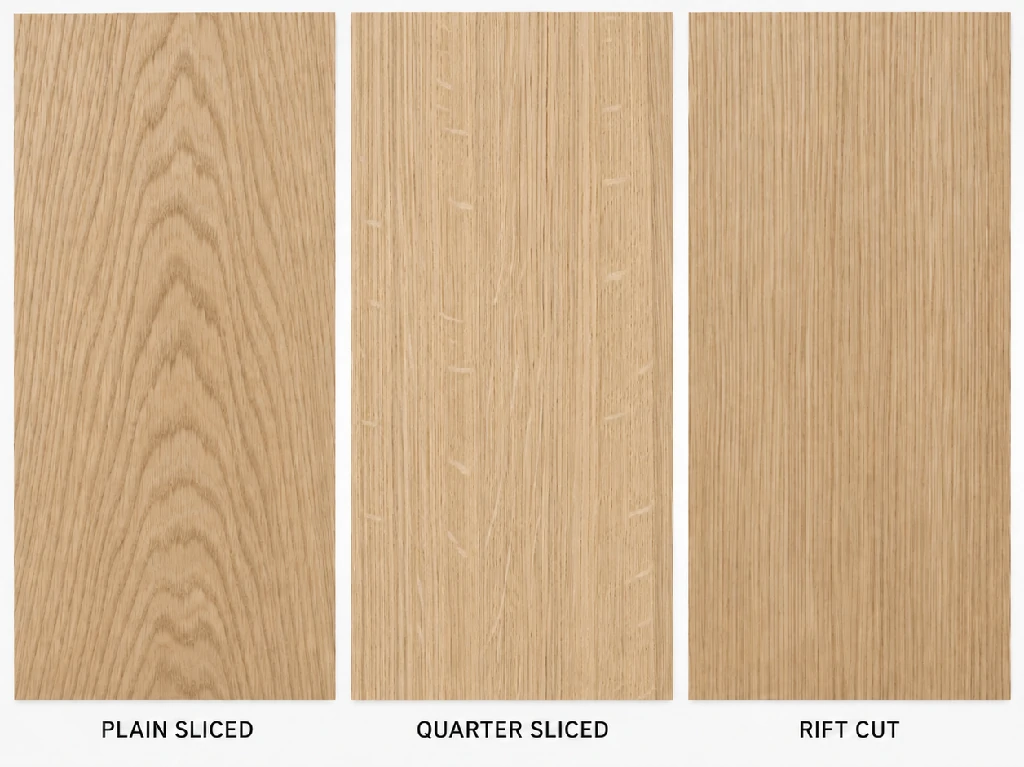
Explore Voyage’s الخشب الرقائقي الصلب range for available species, face constructions and customization options.
2. Why Does Veneer Cut Affect Material Consumption?
A hardwood log is not converted into usable decorative face veneer with 100% recovery. Veneer production also creates trim and edge waste, pieces with defects, material suitable only for lower grades, and veneer that does not meet the required grain direction, color or component width.
For decorative plywood, the buyer is often purchasing a combined specification: species + grain orientation + face grade + minimum component width + matching method. Each additional restriction can reduce the portion of veneer that qualifies for the face.
This is why two quotations for White Oak plywood can differ even when both suppliers state the same panel thickness and face grade. One quotation may allow natural grain variation and narrower components, while the other may require controlled straight grain, wider components and a tighter color range.
3. Plain Sliced: Generally Efficient for Broad Decorative Faces
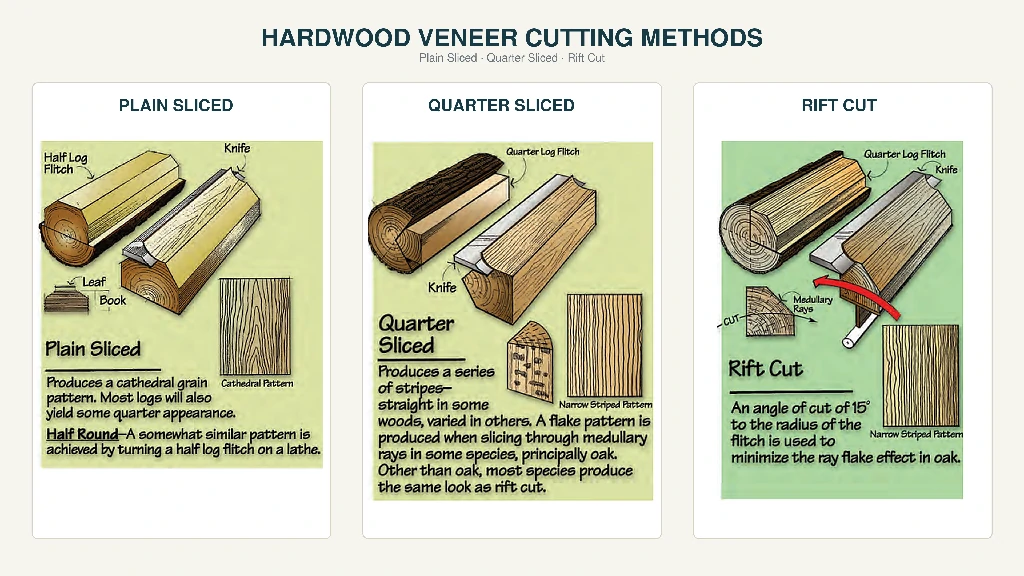
Plain sliced veneer typically produces the familiar cathedral or crown pattern. It is widely used where expressive natural grain is acceptable and can provide relatively broad decorative faces.
When a buyer accepts normal variation in cathedral shape, color and component width, a larger share of available veneer may satisfy the specification. This can help control raw-material consumption. Cost can still rise when the order requires exceptionally wide components, tight color matching, a premium face grade or highly controlled sequencing.
A relevant product example is Voyage’s A-Grade Plain Sliced White Oak plywood.
4. Quarter Sliced: Straighter Grain and More Controlled Selection
Quarter sliced veneer is produced or selected to present a straighter grain. In Oak, the cut may also reveal characteristic ray fleck. Some buyers value that natural feature; others require a quieter surface with less visible flake.
Because the buyer is specifying a particular grain orientation rather than accepting any suitable Oak face, the supplier may need tighter control of log orientation, grain selection, color, component width and matching. The price difference cannot be determined from the cut name alone; the complete visual and dimensional specification must be evaluated.
5. Rift Cut: Why It Can Cost More
Rift cut is especially important for premium White Oak plywood. Its objective is a relatively straight, linear grain with limited emphasis on cathedral patterns and prominent ray fleck.
Not every part of a log or veneer flitch provides the same straight-grain appearance. Meeting a strict rift-cut visual standard may require more selective logs, additional cutting or sorting, greater allowance for downgraded veneer, tighter color control and more careful face matching. These factors can increase raw-material consumption per finished square meter.
Rift cut should not automatically be described as better than plain or quarter sliced. It is a premium choice only when its controlled linear appearance supports the buyer’s design, market position and selling price.
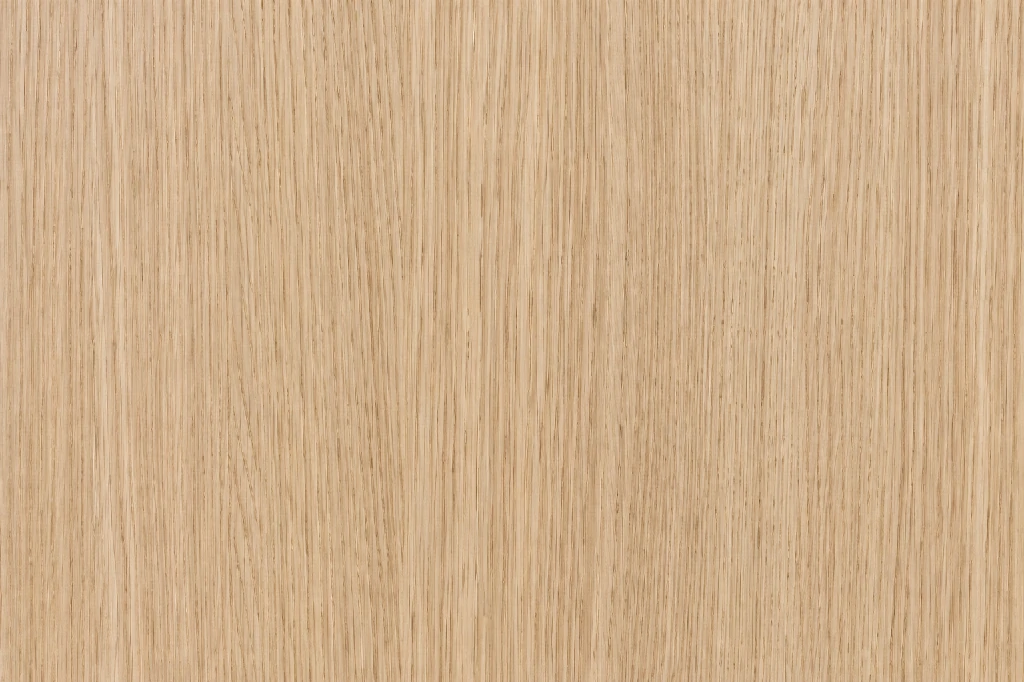
See Voyage’s Rift Cut White Oak plywood product page for a commercial example.
6. Actual Yield Matters More Than the Cut Name
Buyers should avoid assuming that one veneer cut always carries a fixed percentage premium over another. Actual yield varies by species, log quality, diameter, veneer thickness, defect allowance, grade, color range, required component width and production method.
In commercial production, some quarter-sliced or rift-cut faces may also be selected from the straight-grain portions of plain-sliced veneer rather than produced only through a separate true quarter- or rift-cutting process. The resulting face may still meet the agreed appearance standard, but its yield and cost structure can differ. Buyers should confirm whether the quotation is based on a specific cutting process, an appearance-selected face, or an approved visual sample.
Simplified cost relationship
Raw Log Cost ÷ Usable Veneer Yield = Relative Raw Veneer Cost
Relative Raw Veneer Cost + Processing + Sorting + Splicing + Core + Pressing + Sanding + Packaging = Finished Panel Cost
These relationships explain the commercial direction, not a complete costing formula. A supplier must also account for purchasing units, veneer thickness, drying loss, conversion from volume to usable face area, labor, energy, quality control and order-specific waste.
7. Veneer Cut and Component Width Can Increase Cost Together
Veneer cut is only one part of material consumption. Component width—the width of each veneer piece used to assemble the face—also affects visual continuity, joint count and usable recovery.
For example, White Oak / Rift Cut / A Grade / minimum 76 mm component width is more restrictive than a request for White Oak / Rift Cut / commercial grade with no agreed minimum width. If narrower pieces are rejected, more raw veneer may be required to produce the same order quantity.
Voyage’s buying guide explains how component width can affect joint lines, material utilization and final cost.
8. Matching Can Increase Material Consumption Too
Matching should not be confused with veneer cut. A buyer may combine any suitable cut with Book Match, Slip Match, Plank Match, Running Match, Balance Match or Center Match.
The more controlled the face arrangement, the more carefully veneer leaves must be selected and sequenced. A piece may meet the grade by itself but still be rejected from a particular face because its grain, color or position does not match adjacent components.
For appearance-sensitive projects, the buyer should approve both the individual veneer quality and the assembled face pattern. A signed physical sample or agreed sample range provides better control than relying on a cut name alone.
9. How B2B Buyers Should Compare Prices
A price comparison becomes meaningful only after the main face and panel specifications are aligned. The example below shows why two White Oak quotations should not be compared only by price per sheet.
| المواصفات | Supplier A | Supplier B |
| Species | البلوط الأبيض | البلوط الأبيض |
| قطع القشرة الخشبية | شرائح عادية | قطع الصدع |
| Face Grade | أ | أ |
| Minimum Component Width | 127 mm | 76 mm |
| Matching | Slip Match | Book Match |
| Face Veneer Thickness | Not stated | Not stated |
| الأساسيات | Not stated | Not stated |
| Finished Thickness | 18 mm | 18 mm |
| Tolerance | Not stated | Not stated |
| Approved Sample | Yes / No | Yes / No |
These quotations describe different face constructions. Before comparing price, the buyer should align the cut, grade, width, matching, veneer thickness, core, finished tolerance and sample requirement.
Use Voyage’s hardwood plywood buying specification guide as a broader RFQ checklist.
10. What Should Be Written in the RFQ?
- Species: البلوط الأبيض
- Face Grade: A Grade under the agreed grading standard
- Veneer Cut: Rift Cut or agreed straight-grain appearance standard
- Matching: Slip Match
- Minimum Component Width: 76 mm or agreed specification
- Face Veneer Thickness: ___ mm, with measurement stage and tolerance stated
- Core: قشرة القشرة الداخلية
- Finished Thickness: 18 mm with agreed tolerance
- Panel Size: 1220 × 2440 mm
- Surface: Sanded
- Certification and Documentation: As required by destination market
- Reference Sample: Approved before mass production
For larger or repeated projects, buyers can also ask the supplier to confirm the principal yield or material-utilization assumptions used in the quotation without requiring disclosure of proprietary production data.
11. Key Takeaway for Hardwood Plywood Buyers
Veneer cut affects more than the appearance of a hardwood plywood panel. It can change which parts of a log or veneer flitch qualify, how components are sorted and matched, how much material is downgraded, and how much usable face area is obtained.
Grain Requirement → Veneer Selection → Usable Yield → Material Consumption → Production Cost → Final Price
When comparing plain sliced, quarter sliced and rift cut plywood, buyers should ask not only how the grain looks, but also how the complete face specification affects availability and material consumption. This reduces the risk of comparing non-equivalent quotations.
12. Common Buyer Questions
Is Rift Cut plywood always more expensive?
Not always. Rift Cut White Oak often costs more when the order requires strict straight grain, tight color control, wider components and premium matching. The actual difference still depends on log supply, face grade, veneer thickness, panel construction, quantity and the agreed appearance standard.
Does Quarter Sliced always show ray fleck?
Quarter slicing can make ray fleck prominent in Oak, but the amount varies with species, individual logs, cutting orientation and selection. If the buyer wants either pronounced or limited ray fleck, that expectation should be shown in the approved sample.
Can buyers compare veneer cuts using photographs only?
Photographs are useful for early communication but can distort color, scale and grain contrast. For appearance-sensitive orders, a written specification should be supported by a physical control sample or an agreed sample range before mass production.
Final Buyer Checklist
- Species and botanical or regional requirement, if applicable
- Veneer cut or agreed appearance standard
- Face grade and referenced grading standard
- Minimum component width
- Matching method
- Face veneer thickness and measurement stage
- الهيكل الأساسي
- Finished thickness and tolerance
- Approved reference sample or sample range
- Required quantity, packaging and destination documentation
The more specific the decorative requirement, the more important it becomes to understand how that specification affects material utilization, availability and cost.
Voyage can work from the required species, veneer cut, grade, matching method, dimensions and core structure. Request a Hardwood Plywood Specification-Based Quotation.